

Federal officials have released the official 2027 medicare costs, and the news brings welcome breathing room for your retirement budget. Your standard monthly premium edges up slightly, yet your Social Security check grows faster than your healthcare deduction.
Understanding every fee, deductible, and drug cap protects your hard-earned savings from unwelcome surprises. Once you map out those expenses, you can fund travel, hobbies, and grandparenting adventures without guesswork.
Follow these seven practical lifestyle moves to keep your 2027 healthcare bills lean and your calendar full of things you enjoy.
Lifestyle Idea #1: Put Your Net Social Security Raise Straight Into a Joy Fund
See How the Part B Premium Shapes Your Check
According to the Centers for Medicare & Medicaid Services, the standard medicare part b premium 2027 rate is $209.40 per month. CMS announced the finalized rates on November 17, 2026, with all new Part A and Part B figures taking effect January 1, 2027.
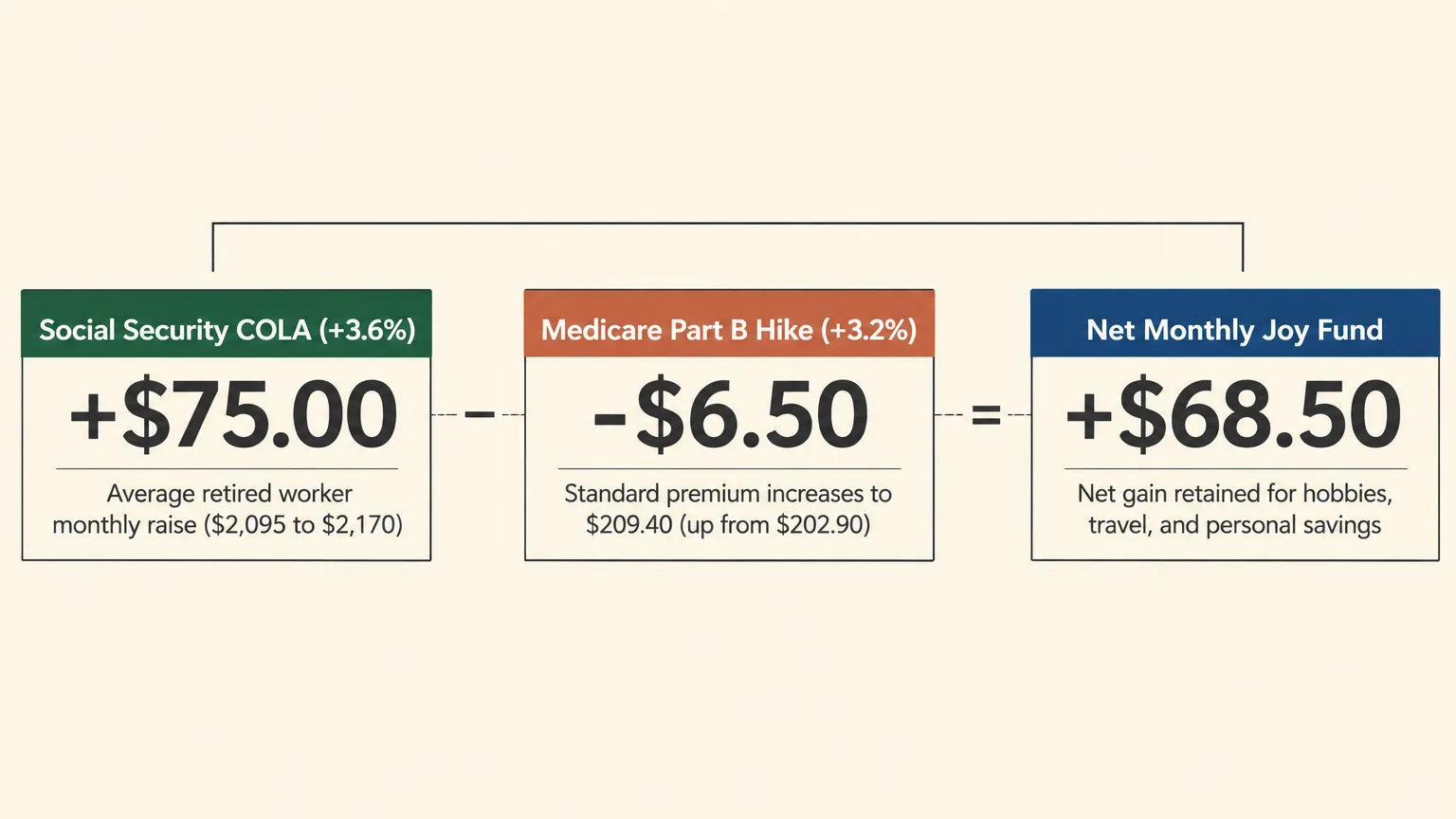
That standard rate represents a $6.50 monthly bump, or 3.2 percent, over the $202.90 rate in 2026. Earlier in 2026, Medicare Trustees projected $209.50, so the finalized $209.40 figure gives you a tiny bit of extra relief across all twelve months.
Over a full year, that medicare premium increase totals $78. Knowing that exact $6.50 monthly change helps you adjust your household budget without overcorrecting or trimming fun activities unnecessarily.
Celebrate a Larger Social Security COLA
On October 14, 2026, the Social Security Administration announced a 3.6 percent Cost-of-Living Adjustment for roughly 76 million Social Security and SSI beneficiaries. That raise tops the 2.8 percent bump in 2026 and stands as the largest adjustment since 2023.
Social Security recipients see those higher payments starting in January 2027, while SSI payments reflect the boost starting December 31, 2026. The SSA estimates the average retired worker benefit rises by $75 per month, climbing from $2,095 to $2,170 before deductions.
Aged couples who both receive benefits see their average combined check grow from $3,238 to $3,355 per month. When you view both announcements together, your purchasing power actually improves heading into the new year.
Direct Your Net Gain Toward Living Well
Because the social security medicare deduction typically comes straight out of your monthly benefit, the $6.50 Part B hike absorbs roughly 8.7 percent of the average $75 raise. Per CMS, SSA, and Newsweek figures, that leaves an average retiree with roughly $68.50 more each month before taxes.
This marks the first time since 2023 that the Social Security COLA outpaces the Part B percentage rise. Hold-harmless rules also protect non-IRMAA enrollees from seeing a standard Part B hike reduce their net Social Security check year-over-year.
Instead of letting that extra $68.50 vanish into routine errands, transfer it automatically into a dedicated joy fund. Use it to pay for pottery workshops, museum memberships, weekend diner breakfasts with friends, or spontaneous treats for your grandchildren.
Lifestyle Idea #2: Build an Early-Year Cushion for 2027 Deductibles and Hospital Care
Prepare for the Higher Part B Deductible
CMS set the annual Part B medicare deductible 2027 limit at $292, which is $9 higher than the $283 deductible in 2026. Once you pay that $292 out of pocket, Original Medicare generally charges 20 percent coinsurance for covered medical services.
Medicare.gov reminds beneficiaries that Original Medicare carries no annual out-of-pocket maximum unless you pair it with Medigap or another supplemental policy. Tucking $292 into a medical savings envelope before January arrives keeps your first doctor visits completely stress-free.
Understand Inpatient Hospital and Skilled Nursing Costs
Roughly 99 percent of beneficiaries owe $0 per month for Part A because they or a spouse logged at least 40 quarters of Medicare-covered work. Voluntary enrollees with 30 to 39 quarters pay $328 monthly, while those under 30 quarters pay $597—up $32 from 2026.
If you enter the hospital under Original Medicare in 2027, your inpatient deductible rises to $1,776 per benefit period for days 1 through 60. That reflects a $40 increase, or 2.3 percent, over the $1,736 deductible in 2026.
Remember that this deductible applies per benefit period rather than once per calendar year. Longer stays cost $444 per day for days 61 through 90, up from $434 in 2026, and $888 per day for lifetime reserve days 91 through 150.
Should you need skilled nursing facility care after a qualifying hospital stay, days 21 through 100 cost $222 per day in 2027, up from $217 in 2026. High-deductible Medigap Plan G and Plan F policyholders also see their annual deductible climb $100 to $3,050.
Protect Your Social Calendar With a Smart Buffer
Reviewing hospital and skilled nursing figures is not about expecting the worst; it is about protecting your peace of mind. When you maintain a dedicated emergency cushion for one benefit period, unexpected health detours never force you to cancel family trips.
Pair that financial cushion with preventive habits that keep you active and energized. Joining a local walking club, swimming at the community center, or cooking nutritious meals with friends supports both your vitality and your retirement savings.
Lifestyle Idea #3: Time Your Retirement Income to Avoid Steep IRMAA Surcharges
Know the 2025 Income Thresholds
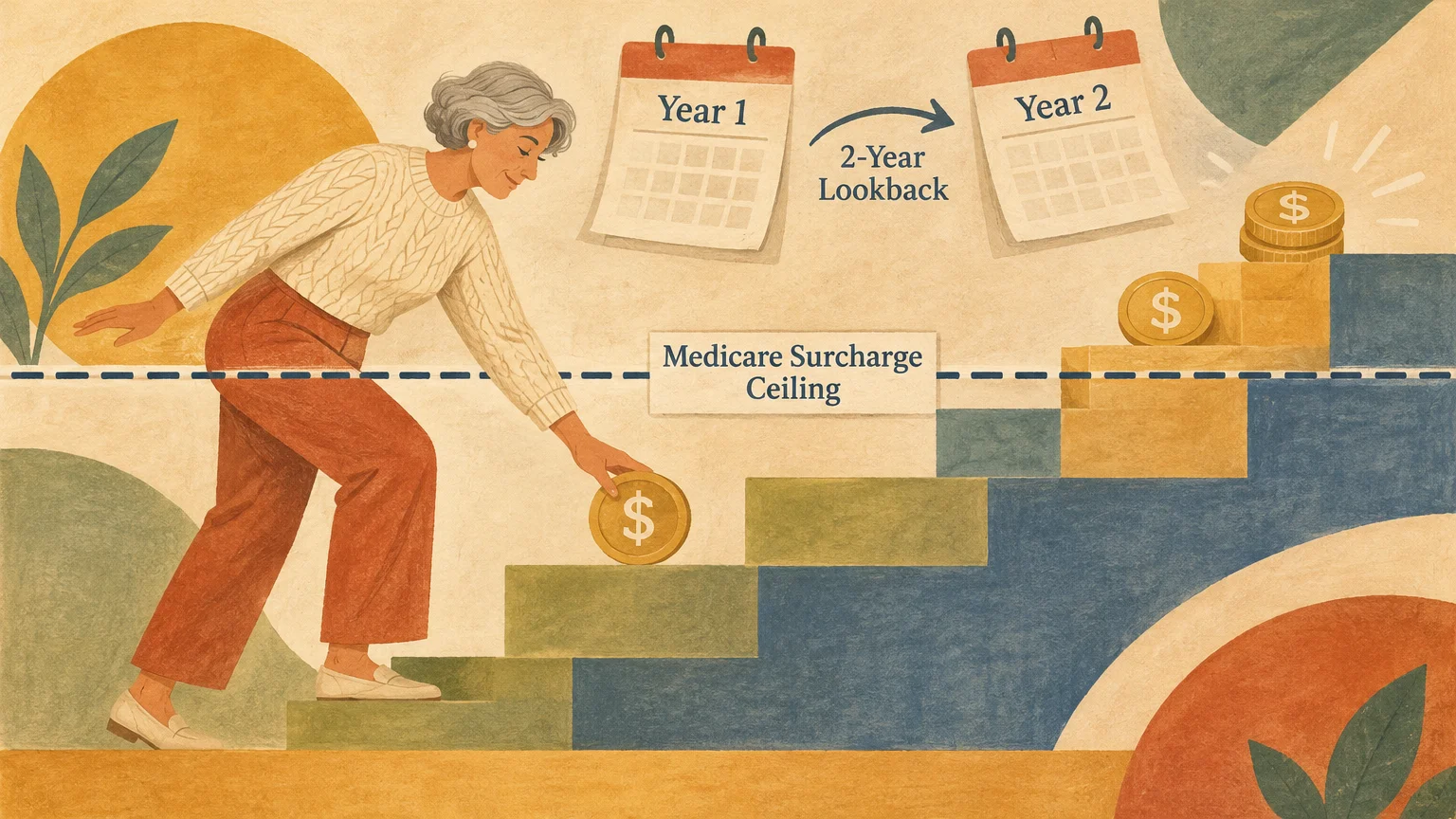
Roughly 9 percent of Part B beneficiaries pay higher Income-Related Monthly Adjustment Amounts, known as IRMAA, based on their 2025 Modified Adjusted Gross Income. Standard 2027 rates apply if your 2025 MAGI stayed at or below $112,000 for individuals or $224,000 for joint filers.
Crossing an income threshold by even one dollar triggers higher monthly charges across both Part B and Part D prescription drug plans. Checking those brackets early helps you avoid an unpleasant surprise when your January benefit statement arrives.
Review Every 2027 IRMAA Bracket
For 2025 MAGI between $112,001 and $141,000 individually, or $224,001 to $282,000 jointly, Part B rises to $293.10 monthly—an extra $83.70—plus $15.40 added to your Part D plan. The next tier hits $418.80 for Part B and $39.70 extra for Part D.
That second tier applies to 2025 incomes from $141,001 to $177,000 for singles, or $282,001 to $354,000 for couples filing jointly. Incomes from $177,001 to $212,000 individually, or $354,001 to $424,000 jointly, push Part B to $544.40 monthly and add $64.00 to Part D.
Earners between $212,001 and $499,999 individually, or $424,001 to $749,999 jointly, pay $670.00 monthly for Part B plus $88.30 for Part D. Top earners at $500,000 or more individually, or $750,000 jointly, pay $711.80 for Part B and $96.40 extra for Part D.
Note that those top statutory brackets will not adjust for inflation until 2028. Married beneficiaries filing separately who lived with their spouse in 2025 pay $670.00 for Part B between $112,001 and $387,999, or $711.80 at $388,000 and above.
Appeal Surcharges After Major Life Changes
If your 2025 tax return reflects a salary you no longer earn, you do not have to accept steep surcharges silently. The SSA lets you request a recalculation using Form SSA-44 when your income drops because of a qualifying life-changing event.
Qualifying events include retirement, work reduction, marriage, divorce, or the death of a spouse. Filing Form SSA-44 promptly keeps hundreds of monthly dollars in your pocket so you can invest in family gatherings, hobbies, and travel instead.
Lifestyle Idea #4: Switch or Verify Your Part D Plan for Major Prescription Savings
Track the New Cap, Deductible, and Base Premium
Under the CMS Calendar Year 2027 Rate Announcement, the Part D annual out-of-pocket cap rises $300 to $2,400, up from $2,100 in 2026. Once your covered drug spending hits $2,400, you pay $0 for covered Part D prescriptions for the rest of 2027.
Plan deductibles can climb higher too, with the maximum allowable Part D deductible increasing from $615 in 2026 to $700 in 2027. Meanwhile, CMS set the 2027 national base beneficiary premium at $41.33 per month, up from $38.99 in 2026.
That base figure matters if you ever go 63 days or longer without creditable prescription coverage, because Medicare uses it to calculate your permanent Part D late-enrollment penalty. Maintaining continuous drug coverage keeps that lifetime surcharge off your monthly bills.
Do Not Coast on Last Year’s Drug Plan
CMS projects average stand-alone Part D plan premiums will rise by less than $1 per month, from roughly $35 to $36, even as a temporary stabilization program ends. However, an October 30, 2026 KFF analysis sounds an important warning for loyal enrollees.
KFF calculates that enrollment-weighted average stand-alone Part D premiums would jump 50 percent to $51 monthly—compared with $9 for Medicare Advantage drug plans—if enrollees stay put without shopping. Comparing formularies each autumn takes less than an hour and could save you hundreds.
Capture New Drug Price Cuts and $0 Vaccines
Big pharmacy savings also arrive on January 1, 2027, when Medicare-negotiated prices take effect for 15 additional Part D medications. That list includes Ozempic, Rybelsus, Wegovy, Trelegy Ellipta, Xtandi, Ibrance, and Janumet, cutting prices 38 to 85 percent below 2024 list prices.
CMS notes that Wegovy’s negotiated 30-day price drops to $274 compared with its $959 list price, saving enrollees an estimated $685 million out of pocket overall. Separately, the temporary Medicare GLP-1 Bridge program runs from July 1, 2026 through December 31, 2027.
Under that Bridge program, eligible Part D enrollees pay a $50 monthly copay for select GLP-1 weight-loss drugs, though that $50 does not count toward your deductible or $2,400 cap. Covered insulin also stays capped at $35 per month with no deductible.
Recommended adult vaccines such as shingles and RSV remain completely free at $0 under Part D. Protecting your immunity means staying healthy enough to attend weddings, volunteer locally, and chase grandkids around the park without missing a beat.
Lifestyle Idea #5: Review Medicare Advantage Changes and Protect Your Travel Freedom
Spot Both Lower Premiums and Plan Exits
If you prefer an all-in-one Part C plan, CMS projects weighted average Medicare Advantage monthly premiums will drop over 16 percent to $12.00 in 2027, down from $14.37 in 2026. More than 99 percent of beneficiaries have access to at least one plan.
Still, do not assume your current policy stays unchanged. Because of insurer plan exits, an estimated 3 million Medicare Advantage enrollees must pick a new plan for 2027, making it vital to read every piece of plan mail carefully.
According to CMS and Kiplinger, mandatory annual out-of-pocket limits for covered Part A and Part B services reach $9,850 in-network and $14,800 combined in-and-out-of-network for 2027. Verify that your favorite doctors, specialists, and local clinics remain inside your plan’s network.
Respect Deadlines and Avoid Lifetime Penalties
Medicare Open Enrollment for 2027 coverage runs from October 15 through December 7, 2026. Marking that window on your kitchen calendar gives you plenty of time to compare Original Medicare plus Medigap against local Medicare Advantage options.
If you are just turning 65 or leaving employer coverage, sign up on time to avoid the permanent Part B late-enrollment penalty. Medicare.gov notes that penalty typically adds 10 percent to your Part B premium for every full 12-month delay without qualifying coverage.
Eligible kidney transplant recipients who are more than 36 months post-transplant and use the immunosuppressive drug-only Part B benefit see a standard 2027 premium of $125.70 per month. With income surcharges, that specialized rate ranges from $209.40 up to $628.10 monthly.
Match Your Coverage to Your Wanderlust
Your insurance should support how you actually live, not pin you down to one zip code. If you split seasons between northern and southern states or take long road trips to visit adult children, verify how your plan handles out-of-area care.
Original Medicare paired with Medigap works seamlessly nationwide wherever Medicare is accepted. If you choose Medicare Advantage, check whether your plan offers nationwide network reciprocity or travel coverage so every adventure feels carefree.

Lifestyle Idea #6: Take Advantage of Home Telehealth and Smarter Wellness Habits
Keep Virtual Doctor Visits in Your Routine
According to the CMS Medicare & You 2027 handbook, pandemic-era telehealth flexibilities allowing covered telehealth visits from home anywhere in the United States remain extended through December 31, 2027. You do not need to visit a rural clinic just to log on.
That convenience saves you gas, parking fees, and precious morning hours that belong on the pickleball court or in your garden. Virtual visits work wonderfully for prescription refills, mental health check-ins, and routine follow-ups with your primary physician.
Protect Your Energy for What Matters Most
Taking care of your health from your sofa leaves more energy for meaningful social connections. You can schedule a quick morning video call with your doctor and still make lunch with your book club or volunteer shift at the library.
Even if you are traveling inside the country to babysit grandkids or explore a national park, home-based telehealth keeps your care team one click away. Staying proactive with small check-ins helps catch minor issues before they turn into expensive hospital visits.
Lifestyle Idea #7: Turn Your Annual Plan Checkup Into a Social and Couples Ritual
Make Plan Comparisons a Shared Afternoon
Sorting through 2027 medicare costs feels far less daunting when you refuse to do it alone at the kitchen table. Brew a pot of coffee, set out some pastries, and invite your spouse, partner, or a trusted retired friend to compare plans together.
Helping each other look up prescription tiers and doctor directories turns a tedious chore into a productive social afternoon. You might even spot a lower-cost Part D option or a plan perk like dental or fitness benefits that your friend overlooked.
Align Your Healthcare Budget With Shared Dreams
Open conversations about premiums, deductibles, and drug caps strengthen relationships at any stage of retirement. When couples agree on how much to set aside for healthcare, arguments over discretionary spending fade into the background.
Every dollar you save by switching away from an overpriced Part D plan or appealing an outdated IRMAA bracket brings shared goals closer. Picture putting those combined savings toward a family reunion cabin, theater season tickets, or culinary classes you take together.

Putting It into Practice: Small Steps for Big Changes
Take Four Simple Actions This Week
Start by gathering your Annual Notice of Change, your Social Security COLA letter, and a written list of every prescription and dosage you take. Having those three items on your desk turns confusing plan comparisons into simple, clear decisions.
Next, verify your 2025 MAGI on your tax return so you know whether IRMAA surcharges apply to you. If your income fell because you retired or experienced another qualifying life event, download Form SSA-44 right away.
Third, enter your prescriptions into Medicare’s plan finder tool before December 7, 2026, especially if KFF’s premium warnings affect your current stand-alone drug plan. Finally, set up an automatic monthly transfer for the net Social Security raise left after your Part B deduction.
Explore Trusted Official Resources
For resources on retirement living, travel, and finance, visit AARP. Official information on Social Security is available at SSA.gov.
For travel advisories, consult the U.S. Department of State.
Checking these reliable hubs before locking in plans or booking international trips keeps your retirement smoother, safer, and far more enjoyable.
Frequently Asked Questions
Will the 2027 Medicare Part B premium increase shrink my Social Security check?
For nearly all beneficiaries, your net Social Security payment will go up in January 2027 rather than down. The 3.6 percent COLA adds an average of $75 monthly for retired workers, easily covering the $6.50 Part B hike and leaving roughly $68.50 extra.
In addition, hold-harmless rules protect non-IRMAA enrollees whose Part B premiums are deducted from Social Security from seeing a year-over-year drop in their net benefit check.
What can I do if my income dropped since 2025 and I received an IRMAA notice?
You can appeal an IRMAA surcharge if your income fell due to a qualifying life-changing event such as retirement, marriage, divorce, or the death of a spouse. Submit Form SSA-44 to the Social Security Administration along with documentation of your lower current income.
Can I keep my current Part D drug plan for 2027 without checking prices?
You can let your plan renew automatically, yet skipping an annual review could cost you heavily. A KFF analysis warns that enrollment-weighted average stand-alone Part D premiums would jump 50 percent to $51 monthly if enrollees do not switch plans.
Drug formularies and deductibles also shift each year, with the 2027 maximum Part D deductible reaching $700 and the out-of-pocket cap climbing to $2,400. A quick comparison during Open Enrollment ensures you capture new negotiated prices on medications like Ozempic or Janumet.
How can I manage higher 2027 deductibles on a tight retirement budget?
Start by funding a small monthly medical reserve using part of your 2027 Social Security COLA increase so the $292 Part B deductible feels manageable. Also take full advantage of $0 recommended adult vaccines, $35 capped insulin, and covered home telehealth visits.
If hospital deductibles like the $1,776 per-benefit-period Part A charge worry you, compare Medigap policies or Medicare Advantage plans with predictable copays before enrollment closes.
Disclaimer: This article provides lifestyle suggestions for informational purposes. Financial, legal, or travel decisions should be made in consultation with qualified professionals.