

Delegating daily money tasks gives you peace of mind and frees up your retirement for pure enjoyment. Sharing financial duties with a capable family member protects your nest egg from costly oversights.
You remain fully in control of your wealth while someone you trust shoulders the tedious administrative legwork. This teamwork shields your accounts from scammers and simplifies complicated paperwork.
Learning how to delegate finances to family allows you to enjoy retirement with absolute confidence and lasting security. Taking these proactive steps today will preserve your hard-earned independence for years to come.
Tip #1: Designating a Trusted Contact Person for Your Brokerage Accounts
Your investment portfolio deserves an extra layer of defense against modern threats. Financial industry guidelines offer a straightforward way to protect your hard-earned investments.
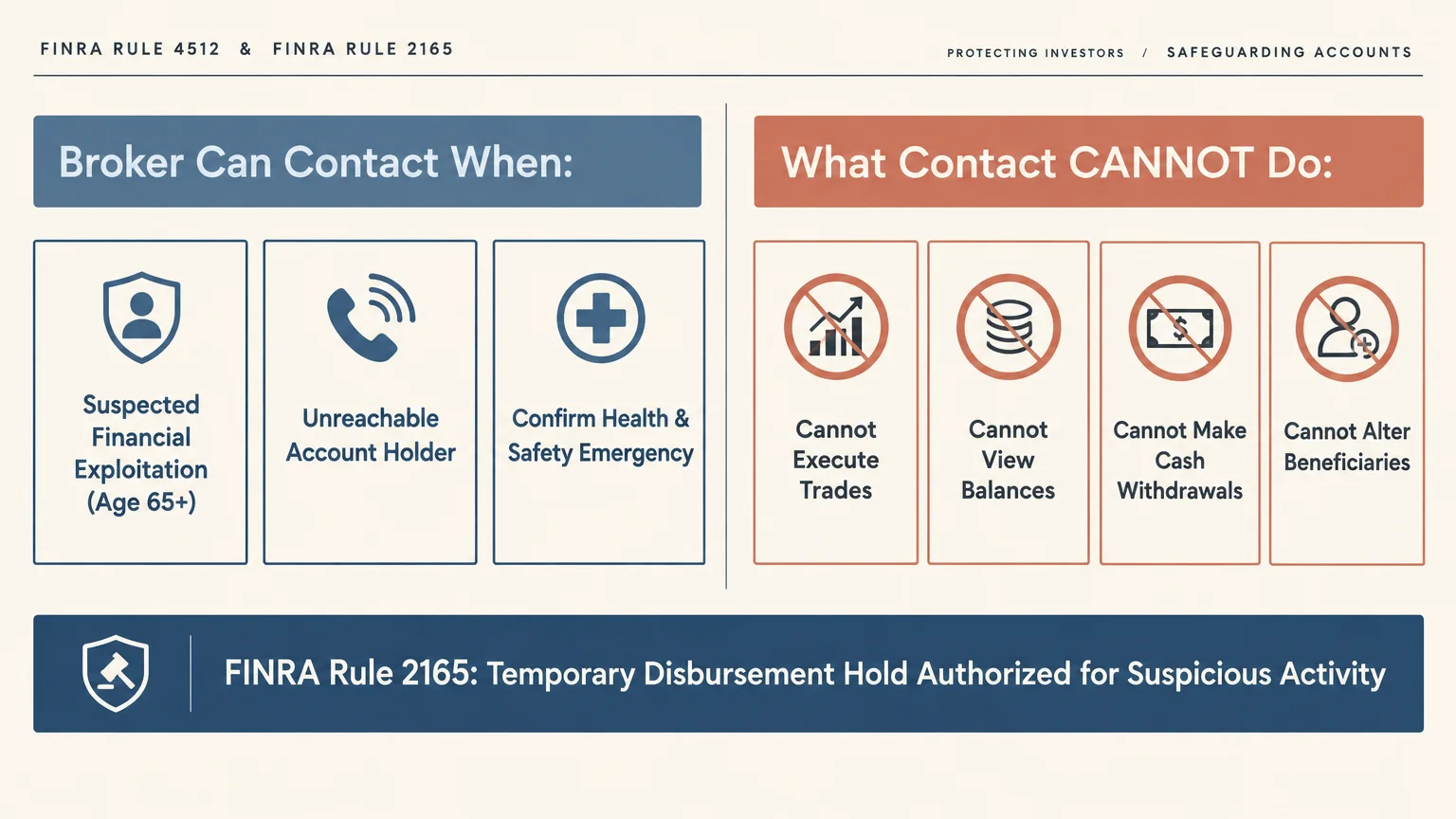
Under FINRA Rule 4512, brokerage firms must ask you to designate an official trusted contact person. This designee must be at least eighteen years old.
Naming a trusted contact person does not surrender any control over your money; your accounts stay completely in your hands. Your loved one cannot execute trades or view balances.
They also cannot make cash withdrawals or alter your account beneficiaries. Instead, this role authorizes your broker to reach out only during urgent situations.
The firm contacts them if they suspect fraud or cannot reach you after repeated attempts. It provides a reliable bridge between your advisor and your family.
Brokerage firms can also place temporary holds on suspicious disbursements under FINRA Rule 2165. This rule protects adults age 65 and older from devastating exploitation.
If an unscrupulous scammer attempts to coerce you, the brokerage firm pauses the transaction. The broker then contacts your designee to confirm your safety.
This protection also helps when you travel internationally or experience temporary health challenges. Your advisor can verify your wellbeing without breaching your confidential financial records.
Talk with your adult child or close relative before adding their contact details to your account profile. Let them know they serve as your protective safety net.
Adding their information takes mere minutes through your online brokerage dashboard. It provides immense peace of mind while preserving your financial privacy.

Tip #2: Setting Up Free Credit Freezes and Fraud Alerts
Protecting your credit identity can feel overwhelming when scammers grow increasingly aggressive. Cyber criminals frequently target older Americans with high-pressure tactics and sophisticated schemes.
In 2025, the FBI Internet Crime Complaint Center reported staggering losses exceeding $7.7 billion among adults aged 60 and older. Victims experienced average losses over $38,000 across more than 201,000 complaints.
A credit freeze serves as your strongest legal shield against unauthorized borrowing. It stops identity thieves from opening new credit cards or loans in your name.
Thanks to the federal Economic Growth, Regulatory Relief, and Consumer Protection Act, credit freezes are 100 percent free. You never have to pay to freeze or thaw your credit files.
You can enlist a trusted family member to set up freezes across Equifax, Experian, and TransUnion. They can securely record your account credentials and security PINs.
When you want to buy a car or switch mobile carriers, your delegate can temporarily lift the freeze. This collaboration keeps your identity locked down without causing personal headaches.
Your helper can also establish automated transaction alerts on your existing credit cards. Getting an instant text message for charges over fifty dollars catches fraudulent charges instantly.
They can also place a freeze with Innovis, a fourth major consumer reporting bureau. Covering every credit repository leaves no open doors for identity thieves to exploit.
Reviewing annual credit reports together creates a transparent defense routine. You stay thoroughly protected while delegating the tedious technical steps.

Tip #3: Organizing Digital Asset Access and Password Portals
Modern financial lives exist almost entirely behind digital screens, two-factor authentication codes, and complex passwords. When an unexpected emergency strikes, locked accounts create painful administrative roadblocks.
Over 45 states and Washington D.C. have enacted the Revised Uniform Fiduciary Access to Digital Assets Act. This legislation regulates who can legally access your digital life.
Standard legal documents do not grant automatic access to online financial accounts. Custodians enforce strict federal privacy laws unless you grant explicit digital authority.
You can partner with a tech-savvy relative to build a secure master inventory of your online presence. This directory catalogs banking portals, utility logins, and digital investment accounts.
Consider adopting a trusted password manager with an emergency access feature. Your designated family member can request access, which unlocks only after a predetermined waiting period.
You can also configure built-in legacy tools such as Apple Legacy Contact and Google Inactive Account Manager. These built-in features honor your specific wishes automatically.
Store physical recovery codes and multi-factor authentication backup keys in a secure home lockbox. Your delegate can access these keys quickly if your smartphone is lost or damaged.
This teamwork makes managing parents finances far easier during health emergencies or international vacations. Your delegate can swiftly verify balances and retrieve necessary tax statements.
Securing your digital footprint protects vital accounts from becoming permanently inaccessible. You maintain day-to-day privacy while ensuring your family can step in when needed.

Tip #4: Designating Advance Social Security and VA Benefit Representatives
Government benefits form the financial backbone of retirement for millions of older adults. However, federal agencies operate under unique statutory frameworks that frequently catch retirees by surprise.
The Social Security Administration does not honor standard state-level financial power of attorney documents. A private power of attorney gives your family member no authority over monthly benefit disbursements.
If you ever require help managing monthly payments, the agency requires an official Representative Payee. Fortunately, you can prepare ahead of time through the Advance Designation program.
Advance Designation allows you to name up to three trusted individuals through your online account. The Social Security Administration contacts these designated individuals if you ever require administrative assistance.
When a Representative Payee manages funds, the government requires annual accounting reports to prevent abuse. This oversight provides reassurance that your retirement funds are handled with complete integrity.
Military veterans encounter very similar procedural guidelines through the Department of Veterans Affairs. The VA does not recognize generic private estate paperwork for veterans’ compensation or pension oversight.
Instead, your chosen family member must apply and gain approval through the formal VA Fiduciary Program. Completing this intake process early prevents heartbreaking disruptions to your monthly income.
Delegating these government benefit designations gives you immense structural stability. Your trusted advocate can resolve billing errors or address payment delays without running into federal brick walls.
Take an afternoon to record your preferences with both agencies alongside your chosen family representative. This single afternoon of planning protects your vital monthly retirement income.
Tip #5: Managing Routine Bill Pay and Recurring Subscriptions
Juggling monthly utility bills, insurance premiums, and medical statements can quickly turn into a relentless chore. Missing a single due date can damage your credit score and trigger frustrating penalty fees.
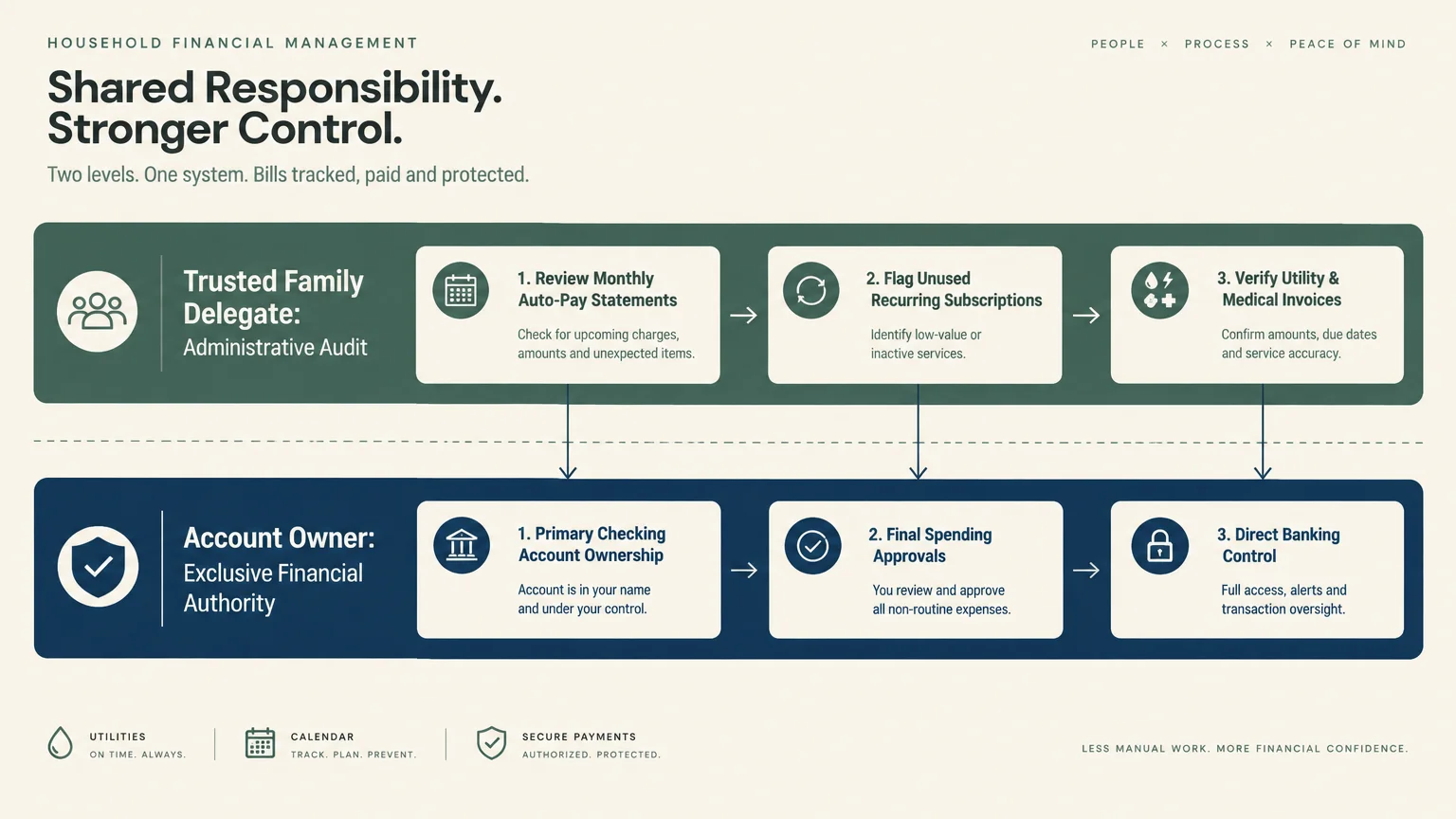
Enlisting a reliable family member to oversee recurring bills brings order and simplicity to your monthly calendar. Learning to delegate finances to family eases your daily stress.
Unused digital subscriptions often drain hundreds of dollars from retiree budgets every single year. Your delegate can comb through bank statements to pinpoint forgotten streaming apps or recurring memberships.
You can establish automated bill pay for predictable expenses like water, electric, and trash services. Your delegate can monitor the checking account to ensure sufficient cash reserves are always present.
For complex variable expenses like healthcare statements, they can match invoices against your insurance explanation of benefits. This watchful oversight ensures you never pay duplicate or erroneous medical bills.
Your delegate can also help you compare annual auto and home insurance renewal rates. Insurance companies often raise rates quietly; a quick annual review can save significant money.
You might also set up a secondary checking account specifically dedicated to household utility bills. This safeguards your core savings while giving your delegate a manageable operational budget.
Shedding the burden of endless payment schedules frees your energy for travel, hobbies, and family gatherings. You stay confident knowing every essential obligation is satisfied on schedule.

Tip #6: Handling IRS Tax Authorizations and Annual Document Gathering
Annual tax season creates unnecessary anxiety for retirees navigating complex reporting rules. Tracking investment dividends, retirement account distributions, and medical expense deductions demands rigorous organization.
Much like federal benefit agencies, the Internal Revenue Service requires specialized forms to authorize third-party assistance. A standard financial power of attorney rarely satisfies strict federal tax authorities.
You can file IRS Form 8821 to establish a formal Tax Information Authorization for your chosen family member. This form allows your delegate to inspect your tax transcripts and review incoming IRS notices.
Form 8821 does not give your loved one the legal power to bind you to agreements. It simply keeps them informed so you never miss an urgent tax correspondence.
If you need your family member to represent you during official disputes, execute IRS Form 2848 instead. This Power of Attorney and Declaration of Representative authorizes formal advocacy on your behalf.
Beyond federal filings, your family assistant can collect tax forms throughout January and February. They can organize 1099-R forms, SSA-1099 statements, and charitable receipts into clear digital folders.
They can also maintain your archived tax returns for three years to satisfy IRS audit rules. Having an organized filing system guarantees fast answers if tax authorities ever have questions.
They can then deliver this organized documentation directly to your certified public accountant. This smooth collaboration saves you expensive accounting fees and prevents rushed filing deadlines.

Tip #7: Overseeing Durable Financial Power of Attorney and Estate Planning Tasks
Every resilient retirement plan requires comprehensive estate planning tasks to ensure legal continuity. Designating a dependable relative as your agent under a durable financial power of attorney is an essential step.
A financial power of attorney empowers your chosen agent to conduct financial affairs if illness or injury occurs. They can manage real estate, sign legal documents, and oversee bank transactions smoothly.
Partner with an experienced elder law attorney to draft or update your durable power of attorney. State laws evolve regularly; clear statutory wording ensures financial institutions accept the document without hesitation.
Pair your financial power of attorney with a healthcare proxy and living will. Coordinating medical and financial directives ensures your designated advocates work in complete harmony during emergencies.
Your trusted delegate can also help you review beneficiary designations across your retirement accounts annually. Beneficiary designations on IRAs, 401(k) plans, and life insurance policies override instructions in your will.
Invite your family helper to audit these accounts to ensure primary and contingent designations remain accurate. Major life events like marriages or births often require timely updates to beneficiary forms.
Store physical copies of your executed legal documents in a fireproof home safe. Provide your designated agent with duplicate copies and the safe combination so they can act quickly.
Taking charge of these crucial estate planning tasks provides tremendous emotional relief. You protect your life savings, preserve your autonomy, and leave a clear path forward for your family.

The Takeaway: Living a More Blissful Retirement
Delegating financial duties is not an admission of vulnerability; it is a brilliant strategy for lasting empowerment. Sharing administrative burdens protects your assets while freeing your schedule for what truly matters.
You spent decades building your wealth and creating a wonderful life for your family. Embracing collaborative support ensures your hard-earned assets stay protected against fraud, confusion, and bureaucratic delays.
Start with small steps by naming a trusted contact person or automating recurring utility bills. As comfort grows, expand your teamwork to cover tax authorizations and advance benefit designations.
Clear communication remains the cornerstone of every successful family partnership. Sit down with your chosen loved ones, share your goals openly, and put your plans in writing.
With reliable allies in your corner, you can navigate your golden years with unshakeable confidence and joy. True financial wellness gives you the freedom to savor every single day of retirement.
For a wide range of resources for older adults, visit AARP and the National Council on Aging (NCOA). Health information is available from the National Institute on Aging.
Disclaimer: This article is for informational and inspirational purposes only. It is not a substitute for professional medical, financial, or psychological advice. Please consult with a qualified expert for guidance tailored to your individual needs.
Frequently Asked Questions
Does delegating financial tasks mean I lose control of my money?
Absolutely not; you remain in complete command of your wealth. Delegating administrative tasks simply means sharing the tedious paperwork and monitoring responsibilities with someone you trust.
You maintain full ownership, decision-making authority, and legal control over your assets. You can modify permissions or revoke authorizations whenever you see fit.
What is the difference between a trusted contact person and a power of attorney?
A trusted contact person has zero access to your money, cannot make trades, and cannot view your balances. They serve purely as an emergency contact for your broker if fraud is suspected.
In contrast, a financial power of attorney grants broad legal authority to sign documents and manage funds on your behalf. A power of attorney carries significant fiduciary responsibility under state law.
How do I choose the right family member to help manage my finances?
Select a relative who demonstrates financial discipline, integrity, and excellent organizational habits in their personal life. Emotional maturity and clear communication skills are far more valuable than professional financial expertise.
You can also divide responsibilities among multiple family members based on their individual strengths. One child might manage online password vaults while another assists with annual tax preparation.
Can I change or revoke these authorizations if circumstances change?
Yes, you retain the legal right to update or revoke these authorizations at any time. You can replace a trusted contact or revoke a power of attorney with written notice.
Review your designations every two years or after significant family milestones. Keeping your authorizations updated ensures your financial support team always matches your current wishes.