
When you file your taxes in 2027, you could uncover a remarkable financial windfall waiting for you. Major tax updates create unprecedented opportunities for retirees to claim a bigger tax refund.
Recent legislation introduces generous deductions that shield your hard-earned retirement nest egg from excessive federal taxation. These positive tax changes reward your decades of hard work and protect your family budget.
Understanding the tax changes 2027 retirees face ensures you keep more money in your pocket. Let us explore the seven most rewarding tax refund surprises awaiting you this filing season.
Tip #1: The Brand-New $6,000 Bonus Senior Tax Deduction
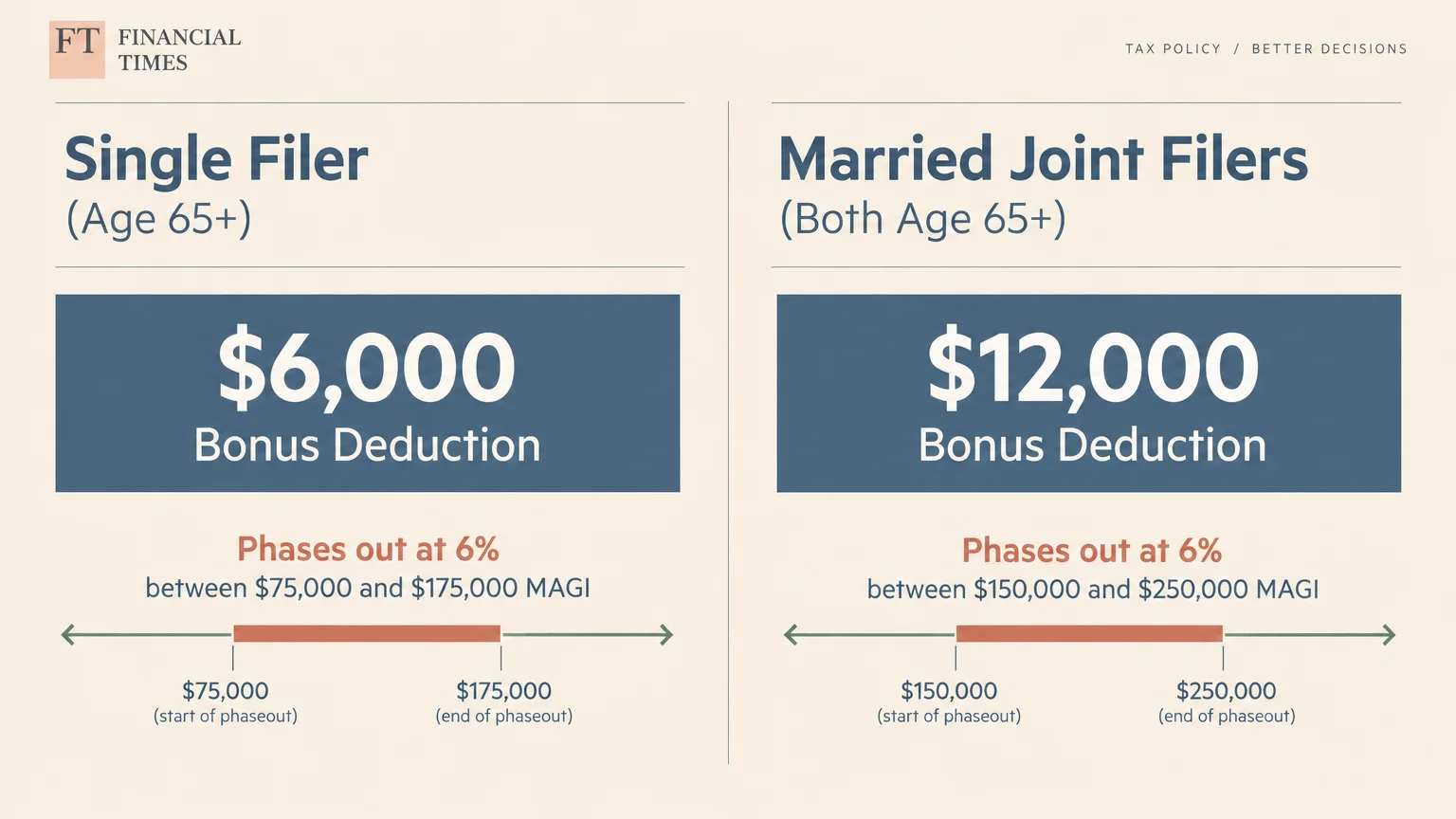
The One Big Beautiful Bill Act introduces an exciting new tax deduction exclusively for older Americans. Starting with the 2026 tax year, qualifying taxpayers age 65 and older can claim a special bonus deduction.
You can deduct an additional $6,000 directly from your taxable income as an individual filer. If you and your spouse are both at least 65, your combined bonus deduction jumps to $12,000.
Best of all, you receive this generous allowance whether you take the standard deduction or itemize your expenses. This unmatched flexibility gives you an immediate head start toward a bigger tax refund.
This temporary relief remains in effect for tax years 2025 through 2028. It helps lower- and middle-income retirees protect their income against persistent inflation and rising living costs.
Income phaseouts do apply to this special senior tax deduction refund. The bonus deduction begins phasing out at a 6% rate once your modified adjusted gross income exceeds $75,000 for single filers.
For married couples filing jointly, the phaseout begins when household income surpasses $150,000. It phases out completely at $175,000 for single filers and $250,000 for joint filers.
Even if your income enters the phaseout range, you can still claim a substantial partial deduction. That extra tax relief puts real money back into your household bank account.
You should monitor your modified adjusted gross income carefully throughout the entire calendar year. Smart financial moves like timing capital gains can keep your income safely below these phaseout limits.
Preserving your eligibility ensures your 2027 tax filing delivers the maximum refund possible. This substantial relief offers genuine financial peace of mind during your golden years.
Review your annual statements to verify your exact age qualification before submitting your return. Taking full advantage of this deduction helps you keep your retirement funds working for you.
Many seniors are unaware of this recent legislative change and risk missing out on valuable savings. Sharing this knowledge with your retired friends helps your entire community flourish financially.
Make sure you claim this specific deduction line when completing your federal paperwork. It stands as one of the most exciting tax refund surprises of the decade.
Tip #2: The Supercharged Standard Deduction Reaching Up to $47,500
Most retirees prefer the simple path of claiming the standard deduction rather than tracking individual receipts. For the 2026 tax year filed in 2027, standard deduction amounts climb to historic record highs.
The baseline standard deduction rises to $16,100 for single filers and $32,200 for married couples filing jointly. Heads of household see their standard deduction rise to $24,150.
On top of this baseline, you also receive the traditional age 65-and-older add-on deduction. This boost adds $2,050 for single filers and $1,650 per qualifying spouse on joint returns.
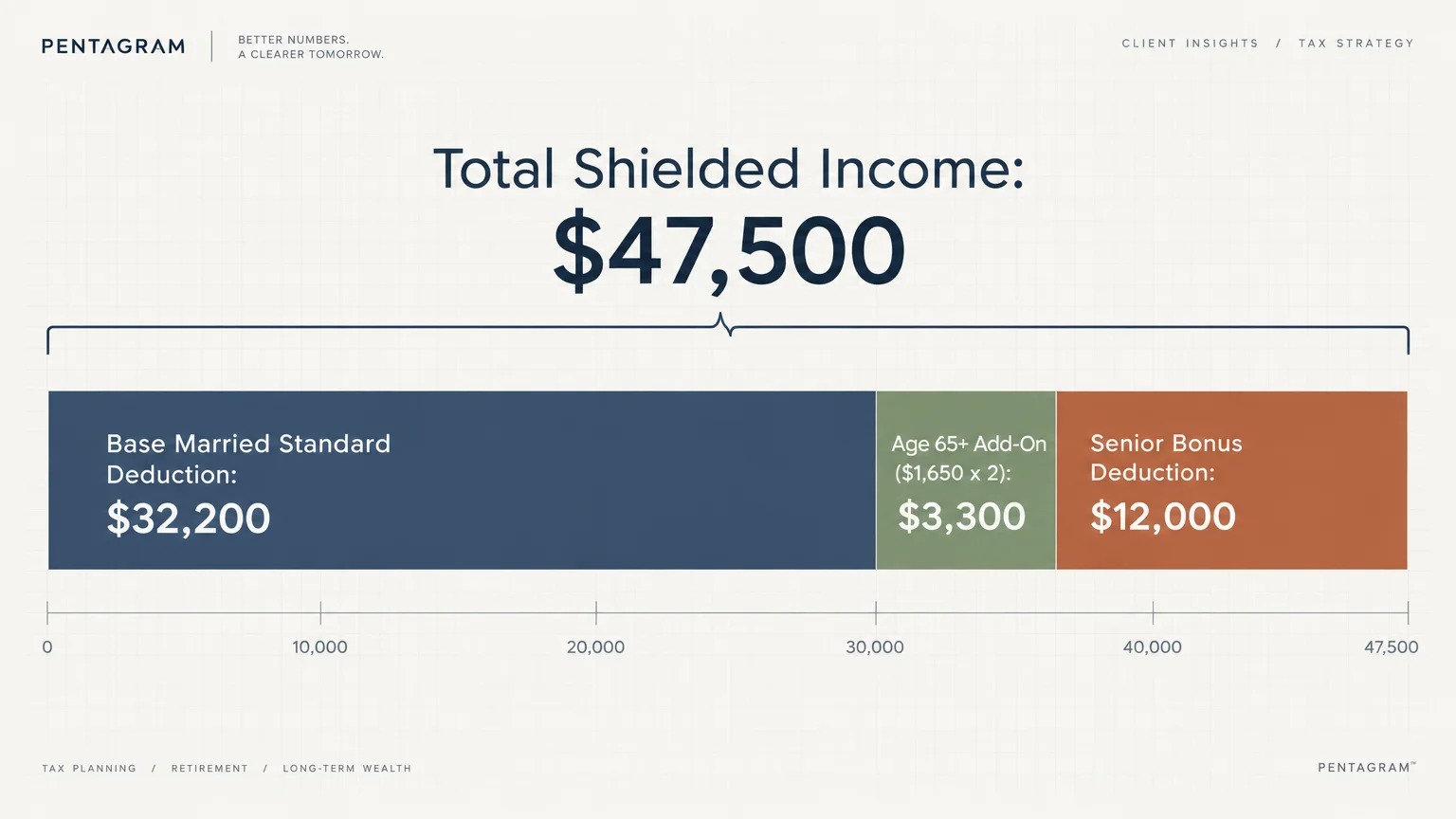
When you combine every available deduction, the total tax shelter becomes truly extraordinary. A married couple who are both 65 or older can shield an astounding $47,500 from federal income tax.
This total combines the $32,200 base deduction, $3,300 in age-based additions, and the $12,000 senior bonus. That means you can earn substantial income before owing a single penny in federal taxes.
Single retirees age 65 and older can shield up to $24,150 of their income. This calculation combines the $16,100 base, the $2,050 senior add-on, and the $6,000 bonus deduction.
This massive tax shield reduces your taxable income dramatically across all revenue streams. Consequently, federal withholdings from your pensions or retirement distributions can come straight back to you.
For many older adults, this windfall represents one of the most pleasant tax refund surprises yet. You can use that extra money to travel, invest, or remodel your home.
Check your annual retirement distributions to see how much income fits beneath these generous limits. You might discover that you can withdraw funds completely tax-free this year.
Widened tax brackets also keep more of your remaining income taxed at lower rates. The 12% bracket now extends up to $50,400 for singles and $100,800 for joint filers.
These permanent lower tax rates prevent the automatic tax hikes that were originally scheduled to occur. You can plan your annual budget knowing your tax rates will remain stable and predictable.
Take advantage of these record deduction thresholds by reviewing your withholding strategy today. Adjusting your tax preferences early guarantees you capture the full refund you deserve.

Tip #3: Above-the-Line Giving That Rewards Non-Itemizers
Retirees consistently rank among the most generous supporters of community charities, religious organizations, and local non-profits. A recent tax provision ensures your generosity gets rewarded even if you do not itemize.
Starting in the 2026 tax year, non-itemizers can claim a permanent above-the-line charitable deduction. You can deduct up to $1,000 as a single filer or $2,000 when filing jointly.
This deduction applies to direct cash donations made to qualifying public charities. You no longer need to track dozens of small expenses just to write off your charitable giving.
Every eligible dollar you donate directly reduces your adjusted gross income on page one of your return. This immediate reduction lowers your overall tax liability and paves the way for a bigger tax refund.
Make sure you keep bank records or written acknowledgment letters from the organizations you support. Clean documentation guarantees that your charitable tax refund 2027 claims sail smoothly through processing.
Meanwhile, retirees who still choose to itemize face a new 0.5% adjusted gross income floor. Only charitable gifts exceeding that 0.5% threshold qualify for an itemized deduction.
For many seniors, claiming the standard deduction alongside this new giving perk provides a much larger write-off. It combines simplicity with meaningful financial incentives for your philanthropy.
You can support your local food bank, animal shelter, or place of worship with complete confidence. Your heartfelt generosity will directly brighten your tax return when you file in 2027.
Planning your donations throughout the year ensures you reach the full $1,000 or $2,000 deduction cap. Spreading your gifts across several months makes giving easy on your regular monthly cash flow.
Remember that donations of used household goods do not count toward this specific cash deduction. Focus your giving on direct check, credit card, or electronic transfers to maximize your savings.
Giving back enriches your retirement experience and builds strong bonds across your community. Knowing that the tax code supports your generosity makes your giving feel even sweeter.
Discuss your charitable plans with family members so you can coordinate your annual giving goals. It is a wonderful feeling to help others while strengthening your personal financial health.

Tip #4: The Quadrupled SALT Cap Restoring Large State Write-Offs
For years, homeowners felt constrained by the strict $10,000 cap on State and Local Tax deductions. That restriction prevented many property-owning seniors from receiving meaningful deductions for their real estate taxes.
Under recent legislation, Congress quadrupled the cap, adjusting it for inflation to $40,400 for 2026. If you file as married filing separately, your limit stands at $20,200.
This dramatic increase applies to combined state income taxes, local sales taxes, and residential property taxes. It offers tremendous relief if you live in an area with high property values.
With a $40,400 limit, itemizing your deductions might once again beat claiming the standard deduction. Swapping to itemized deductions could trigger an unexpected surge in your refund amount.
High-income earners should note that this expanded cap phases down for incomes above $505,000. However, the vast majority of retirees will enjoy the full benefit without any reduction.
Gather your property tax statements and state income tax receipts as the tax season approaches. Compare your total itemized deductions against your standard deduction threshold before choosing how to file.
If your home taxes were previously capped at $10,000, you could suddenly unlock tens of thousands in extra write-offs. That substantial shift can wipe out your remaining tax liability entirely.
Taking advantage of this restored deduction lets you enjoy your beloved family home without feeling penalized. It rewards you for staying rooted in the community you cherish.
Talk with a tax preparer to determine whether itemizing now serves your financial interests best. That simple calculation might deliver one of your greatest tax refund surprises.
Even if you paid off your mortgage decades ago, your annual property taxes remain fully deductible. Those local tax payments now translate directly into valuable federal tax relief.
Keep thorough records of any estimated state tax payments you made during the tax year. Adding those payments to your property tax bills helps you reach the maximum allowed write-off.
This restored deduction provides immense comfort to seniors living on fixed incomes in appreciating neighborhoods. You can stay in your beloved neighborhood while enjoying well-deserved tax relief.

Tip #5: Deductions for Working Seniors and Auto Loan Interest
Many seniors choose to work part-time during retirement to stay active, social, and engaged. If you pick up occasional shifts or work in hospitality, new rules bring incredible financial perks.
Semi-retired seniors can deduct up to $25,000 in qualified tips from their taxable wages. In addition, you can deduct up to $12,500 in overtime earnings, or $25,000 on a joint return.
These deductions remain effective through 2028 and apply whether you itemize or claim the standard deduction. Phaseouts begin only if your income exceeds $150,000 for singles or $300,000 for couples.
If you bought a vehicle recently, another exciting tax incentive awaits your 2027 tax filing. You can deduct up to $10,000 in auto loan interest on qualifying new vehicles.
To qualify for this write-off, the vehicle must be new and assembled within the United States. This deduction phases out starting at $100,000 income for single filers and $200,000 for joint filers.
You can claim this car loan deduction right alongside your regular standard deduction. It puts extra cash into your wallet simply for financing an American-made vehicle for your retirement travels.
Combining active work perks with vehicle interest savings creates a powerful boost to your bottom line. Any taxes withheld from your paychecks can quickly turn into a sizable refund check.
Working during your golden years should feel personally and financially rewarding, not burdensome. These specialized deductions ensure that your extra effort translates into tangible financial freedom.
Keep detailed paystubs and your auto financing paperwork organized throughout the year. Bringing those documents to your tax appointment guarantees you claim every dollar you earned.
Verify your vehicle assembly location by checking the certification label inside the driver door frame. Knowing your vehicle qualifies gives you complete confidence when claiming the interest deduction.
Part-time consulting or greeting shifts at local venues can now generate practically tax-free income. This favorable tax treatment lets you enjoy staying productive without fearing heavy tax penalties.
Embrace these unique workforce incentives to fund extra vacations, hobbies, or home improvements. Your active lifestyle deserves to be celebrated with meaningful tax savings.

Tip #6: Higher Qualified Charitable Distribution Limits to Bypass Income
Once you reach age 73, Required Minimum Distributions compel you to withdraw money from traditional IRAs. These mandatory withdrawals often push retirees into higher tax brackets and trigger unnecessary income taxes.
Fortunately, Qualified Charitable Distributions allow seniors age 70½ and older to bypass this issue completely. For the 2026 tax year, the annual limit rises to $111,000 per individual.
You can also use a one-time split-interest election of up to $55,000 for charitable gift annuities. This tool creates guaranteed retirement income while simultaneously reducing your taxable estate.
When you transfer funds directly from your IRA to a charity, the distribution counts toward your RMD. Best of all, that distributed money never touches your adjusted gross income.
Keeping that money out of your AGI produces several major financial advantages for your return. It prevents your Social Security benefits from crossing the unindexed thresholds of $25,000 or $32,000.
It also helps you avoid costly Medicare Part B premium surcharges linked to higher reported income. Less taxable income means any estimated tax payments you made can come back as a refund.
Instruct your IRA custodian to transfer your charitable gifts directly to the qualifying non-profit organization. If you cash the check yourself first, you lose this valuable tax-free advantage.
This strategy lets you support cherished causes while shielding your retirement assets from excessive taxation. It is an elegant way to maintain financial wellness and leave a lasting legacy.
Speak with your financial institution early in the year to schedule your direct charitable transfers. Managing your distributions smoothly keeps your overall tax liability comfortably low.
Both spouses can utilize this provision if each holds a separate traditional IRA account. That means a retired couple could potentially exclude up to $222,000 from their taxable income.
Always confirm that the receiving entity qualifies as an eligible 501(c)(3) public charity. Taking that simple verification step ensures your distribution satisfies federal reporting guidelines perfectly.
Bypassing taxable income through direct distributions is a masterclass in modern retirement planning. You bless others while protecting your hard-earned wealth from avoidable taxation.

Tip #7: Higher Medicare Premiums Unlocking the Medical Expense Threshold
Healthcare represents one of the largest budget categories for older adults navigating retirement. Fortunately, IRS rules allow you to deduct qualifying out-of-pocket medical costs that exceed 7.5% of your income.
In 2026, standard Medicare Part B premiums climbed to $202.90 each month. That substantial increase means you pay over $2,434 annually per person just for basic outpatient coverage.
In addition, the Part B annual deductible rose to $283, while Part A hospital deductibles reached $1,736. When combined with prescription co-pays and dental care, your total medical spending accumulates quickly.
Because these mandatory healthcare expenses climbed, you can clear that 7.5% deduction threshold much faster. Surpassing this floor allows you to deduct significant medical expenses on your return.
Meanwhile, Social Security benefits increased with a 2.8% cost-of-living adjustment during 2026. Because federal tax thresholds on benefits remain at $25,000 for singles and $32,000 for couples, more benefits become taxable.
This frustrating dynamic is often called the Social Security tax torpedo by retirement planning experts. However, the new $6,000 senior tax deduction and medical deductions work together to neutralize that tax hit.
These combined deductions protect lower- and middle-income retirees from owing unexpected taxes on their benefits. Instead, excess tax withholdings flow right back to you as an uplifting refund.
Save every receipt for dental work, hearing aids, prescription eyeglasses, and medical travel expenses. Those everyday wellness purchases add up to substantial tax savings when filing your 2027 paperwork.
Turning high healthcare costs into valuable tax write-offs softens the financial impact of aging. It ensures that taking care of your health brings practical financial rewards at tax time.
If you pay Medicare supplemental premiums or private dental insurance, include those costs in your tally. Every documented medical dollar helps push you further past the 7.5% deduction barrier.
Keep a dedicated folder for your annual health receipts and mileage logs to medical appointments. Organized documentation turns medical stress into a straightforward and profitable filing experience.
Celebrating your health and financial security goes hand in hand during your golden years. These medical deductions ensure you keep more resources dedicated to your personal vitality.

The Takeaway: Living a More Blissful Retirement
Retirement marks a wonderful chapter where your personal well-being and happiness should take center stage. Staying informed about tax changes 2027 retirees face empowers you to safeguard your resources.
The tax code now offers unprecedented protections through enlarged standard deductions and targeted senior bonuses. These rules ensure you keep more of your hard-earned savings where they belong.
Whether you claim the $6,000 senior deduction, write off car interest, or donate directly, rewards await. Each smart decision moves you closer to securing a bigger tax refund this spring.
Take time now to review your income sources, charitable goals, and potential itemized deductions. Proactive planning eliminates anxiety and replaces it with confidence and excitement for the year ahead.
You worked hard for decades to build this life and enjoy your golden years in comfort. Embracing these positive financial opportunities lets you focus on creating joyful memories with those you love.
Financial peace of mind allows you to pursue hobbies, travel to scenic destinations, and support your family. Knowing your tax strategy is sound gives you the freedom to truly savor every day.
Make tax planning an empowering part of your annual routine rather than a stressful chore. When you take charge of your finances, you build a foundation for lasting joy and relaxation.
Celebrate every milestone along your retirement journey with gratitude and optimism. Your future is bright, and these tax benefits are here to support your continued thriving.
Frequently Asked Questions
Do I have to choose between the standard deduction and the $6,000 senior bonus?
No, you do not have to choose between them on your return. You can claim the $6,000 senior bonus whether you take the standard deduction or itemize your expenses.
If both you and your spouse are 65 or older, you receive a combined $12,000 bonus. This deduction applies directly to your return as long as you meet the income requirements.
Will my Social Security cost-of-living adjustment trigger higher taxes in 2027?
Social Security COLA increases can push your provisional income over the unindexed $25,000 or $32,000 thresholds. This situation often exposes a larger portion of your monthly benefits to income taxes.
However, the new $6,000 senior deduction works to completely offset that tax increase for most retirees. Many seniors will actually receive a larger refund despite their higher benefit checks.
Can I deduct donations to charity without itemizing my deductions in 2027?
Yes, you can deduct cash charitable gifts without itemizing on your 2026 tax return filed in 2027. Single filers can deduct up to $1,000, while married couples filing jointly can deduct $2,000.
This deduction comes straight off your income, offering a valuable tax reduction for your community giving. Just remember to keep written receipts from the public charities you choose to support.
How do the widened tax brackets help retirees save money on distributions?
Inflation adjustments widened the federal tax brackets, meaning more of your income is taxed at lower rates. For instance, the 12% bracket now extends up to $50,400 for singles and $100,800 for joint filers.
This expansion allows you to withdraw more money from your traditional IRAs without jumping into the 22% bracket. It keeps your overall tax liability lower throughout your entire retirement.
For a wide range of resources for older adults, visit AARP and the National Council on Aging (NCOA). Health information is available from the National Institute on Aging.
Disclaimer: This article is for informational and inspirational purposes only. It is not a substitute for professional medical, financial, or psychological advice. Please consult with a qualified expert for guidance tailored to your individual needs.