

Choosing the right health coverage protects your physical vitality and safeguards your hard-earned retirement savings. Asking targeted questions before enrolling ensures your plan covers necessary treatments without draining your budget.
Healthcare costs shift constantly, making an annual review essential for maintaining your physical well-being. Missing key plan updates can disrupt access to your trusted specialists and increase your daily prescription medication costs.
Take control of your healthcare journey during this open enrollment period. Use these five critical questions to evaluate your options and secure the high-quality care you deserve.
Wellness Tip #1: Does the Plan Cover Your Prescriptions Under the New Out-of-Pocket Caps?
Understanding the 2027 Prescription Benefit Caps
Your prescription medications keep your body functioning at its highest potential. A sudden increase in drug costs can compromise your physical health if you are forced to skip daily doses.
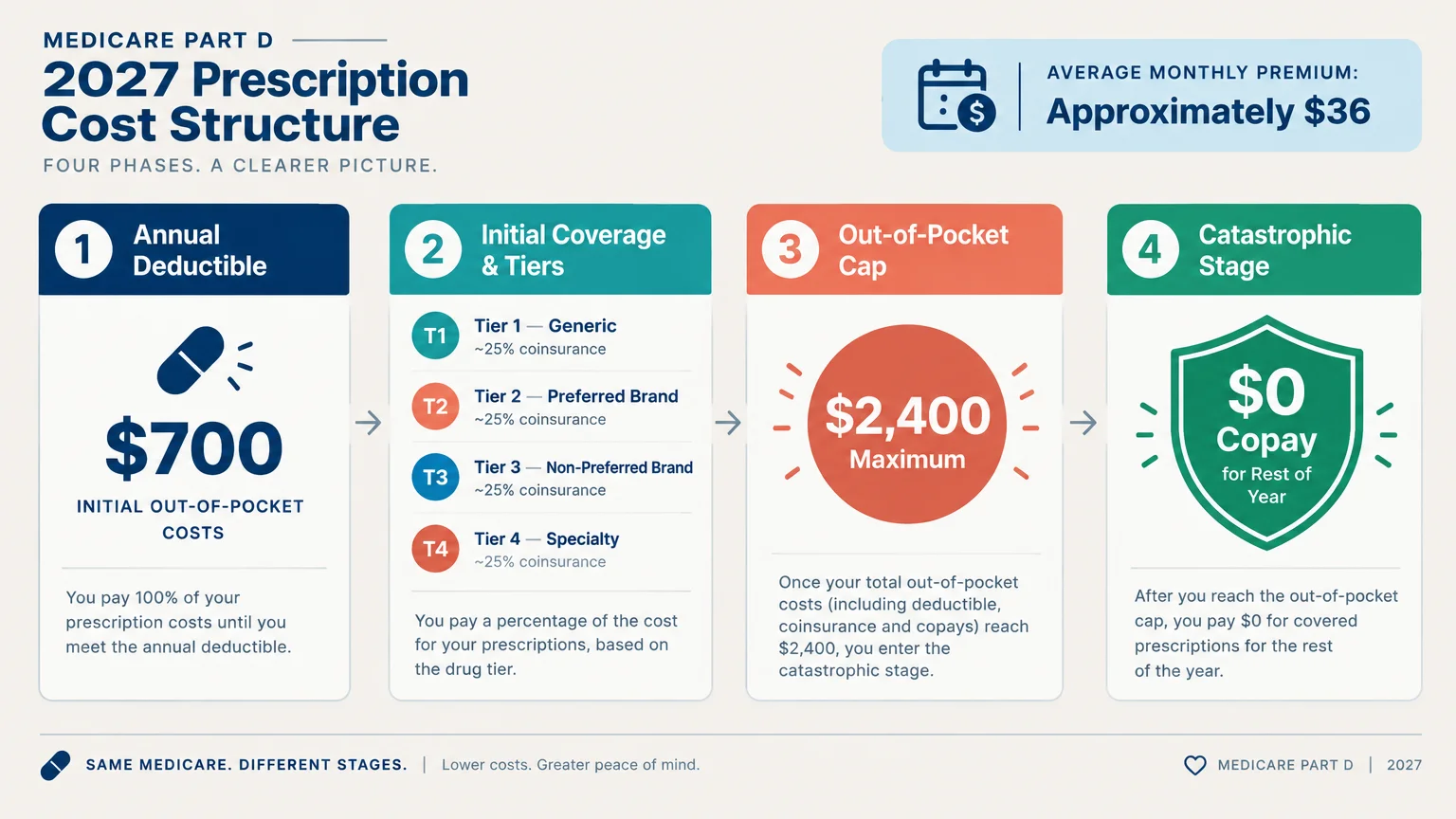
For the 2027 plan year, the annual out-of-pocket maximum for covered Medicare Part D prescription drugs rises to $2,400. Once you reach this threshold, you pay $0 for your covered medications for the remainder of the year.
This cap provides immense relief if you manage ongoing conditions like rheumatoid arthritis, diabetes, or cardiovascular disease. It replaces older coverage structures that exposed seniors to catastrophic prescription bills.
However, you must confirm that your specific medications sit on the plan formulary. If your insurer drops your drug from its approved list, your payments will not count toward this $2,400 cap.
Navigating Deductibles and Drug Tiers
The highest deductible a Part D drug plan can charge in 2027 rises to $700. You must pay this initial amount before your copayments or coinsurance take effect.
Meanwhile, the Centers for Medicare & Medicaid Services projects the average stand-alone Part D monthly premium will be approximately $36 in 2027. Reviewing these figures helps you compare health plans and budget accurately for your wellness regimen.
Examine how each prospective insurer categorizes your prescriptions across distinct tiers. Generic medications on Tier 1 typically cost only a few dollars, whereas Tier 4 specialty drugs demand substantial coinsurance percentages.
Inquire whether your plan imposes prior authorization or step therapy rules on maintenance therapies. These administrative barriers can delay essential medical treatments for cardiovascular wellness and joint mobility.
Evaluating Pharmacy Networks and Mail-Order Delivery
Always verify whether your local pharmacy qualifies as a preferred in-network retail location. Using a non-preferred pharmacy can double your copayment fees, straining your monthly healthcare budget unnecessarily.
Many insurers offer mail-order pharmacy services that provide ninety-day supplies at discounted copay rates. This option ensures you never run out of maintenance medications during severe winter weather or travel.
Ask how the mail-order facility handles temperature-sensitive shipments like insulin or biologic arthritis injections. Reliable refrigeration during transit protects medication potency and preserves your physical well-being.
Investigating these prescription details gives you essential health insurance questions to raise before open enrollment closes. Clear answers safeguard both your medicine cabinet and your retirement finances.
Wellness Tip #2: Are Your Trusted Doctors and Specialists Truly In-Network?
Maintaining Continuity with Your Care Team
Strong patient-doctor relationships form the cornerstone of lifelong vitality. When you work with clinicians who know your medical history, managing age-related changes becomes far more effective.
Network directories change every single year as provider contracts expire and renegotiations occur. Never assume your primary physician, cardiologist, or physical therapist will automatically remain covered under your current policy.
For 2027, 11 insurance carriers are exiting at least one state market entirely. If your insurer leaves your area, automatic re-enrollment could shift you into a plan that excludes your long-time doctors.
Call your physicians directly to confirm whether they plan to accept your prospective insurer next year. Relying solely on online insurer directories can lead to outdated and misleading network information.
Evaluating HMO Versus PPO Flexibility
Health Maintenance Organizations generally offer lower premiums but restrict you to their strict network. You must obtain specialist referrals from your primary physician before receiving advanced diagnostic care.
Preferred Provider Organizations provide broader freedom to consult out-of-network physicians, though at higher out-of-pocket costs. This flexibility is invaluable if you travel frequently or require specialized cancer or joint care.
Make sure your preferred regional hospitals and outpatient surgery centers belong to the network as well. Emergency stabilization is protected, but elective surgeries like knee replacements require contracted facilities to avoid catastrophic bills.
Pay close attention to tiered provider networks where certain in-network specialists carry higher copayments. Selecting top-tier preferred providers keeps your out-of-pocket costs predictable while supporting your physical recovery.
Assessing Telehealth and Urgent Care Access
Inquire about telehealth coverage for routine medical consultations and chronic care check-ins. Virtual visits can keep you safe during winter illness seasons while preserving your physical energy.
Check which urgent care centers near your home participate in the plan network. Knowing where to seek immediate care for minor sprains or infections prevents expensive emergency room visits.
Choosing a health plan with expansive physician access ensures seamless coordination across all your healthcare needs. This continuity prevents diagnostic oversights and supports long-term physical independence.

Wellness Tip #3: What Are the Real Out-of-Pocket Limits for Unexpected Health Events?
Analyzing Marketplace and Employer Out-of-Pocket Caps
A plan with an enticingly low monthly premium can prove financially devastating after an unexpected hospitalization. You must look beyond the premium to assess your total exposure to medical debt.
For the 2027 plan year, the maximum out-of-pocket limit for ACA-compliant individual coverage jumps to $12,000. Family coverage limits climb to $24,000, representing a significant 13.2% increase.
Furthermore, 2027 ACA Marketplace plans face a median proposed premium increase of 15%. With enhanced premium tax credits expired, higher earners face the return of the subsidy cliff.
If you receive coverage through work, note that employer-sponsored health benefit costs are projected to rise 8.2% for 2027. Many employers are shifting these financial burdens to workers through higher deductibles.
Preparing for Medicare Part B Out-of-Pocket Costs
If you are 65 or older, review your standard Medicare Part B expenses carefully. For 2026, the standard Part B premium is $202.90 per month with a $283 annual deductible.
The Medicare Trustees Report projects that standard premiums will rise to $209.50 monthly in 2027, with the deductible reaching $292. Original Medicare generally pays 80% of covered outpatient services thereafter.
Without supplemental Medigap coverage or an out-of-pocket cap from Medicare Advantage, that remaining 20% coinsurance has no ceiling. A single major joint replacement or cardiac procedure could cost you thousands.
Always ask how coinsurance applies to advanced outpatient imaging like MRIs and CT scans. Paying a 20% coinsurance rate on expensive diagnostic technology creates far higher bills than a flat copay.
Calculating Your True Worst-Case Medical Expense
Calculate your annual maximum financial exposure before signing any enrollment papers. Add twelve months of premium payments to the plan maximum out-of-pocket limit to reveal your true financial risk.
Review the specific cost-sharing rules for emergency ambulance transportation and out-of-state emergency admissions. Unexpected transport fees can bypass regular network protections if your policy lacks comprehensive emergency coverage.
Implementing these health plan tips shields your retirement nest egg from medical insolvency. Financial security reduces emotional stress, which directly supports your heart health and immune resilience.
Wellness Tip #4: Does the Policy Support Preventive Wellness and Physical Therapy?
Prioritizing Restorative Therapy and Mobility Care
Preserving your physical strength, balance, and flexibility requires access to comprehensive preventive and rehabilitative care. Ensure your prospective health plan generously covers outpatient physical therapy and occupational rehabilitation.
Many policies cap physical therapy at twenty or thirty visits per calendar year. If you are rehabilitating after joint surgery or managing spinal stenosis, you can exhaust that limit rapidly.
Ask whether physical therapy requires physician pre-authorization or diagnostic imaging before treatments begin. Immediate access to physical therapy prevents acute muscle injuries from worsening into chronic functional mobility limitations.
Check if the policy includes comprehensive cardiac rehabilitation coverage following cardiovascular episodes or stent placements. Supervised exercise programs significantly reduce mortality rates and restore physical confidence in active older adults.
Leveraging Zero-Cost Screenings and Fitness Incentives
Federal regulations require most insurance plans to provide essential preventive screenings at zero out-of-pocket cost. These services include annual wellness visits, mammograms, colorectal cancer screenings, bone density measurements, and cholesterol panels.
Early detection of metabolic or cardiovascular imbalances allows you to modify lifestyle habits before chronic disease develops. Always verify that your prospective plan waives coinsurance for these preventative lab tests.
Many modern plans provide fitness club allowances or access to structured exercise networks like SilverSneakers. Regular aerobic and resistance training strengthens bone density, stabilizes blood glucose, and lifts cognitive mood.
Inquire about lifestyle wellness programs that provide nutritional counseling or weight management support. Professional dietary guidance helps you design an anti-inflammatory nutrition plan that reduces joint stiffness and protects cardiovascular wellness.
Supporting Vision, Hearing, and Mental Health
Preserving your sensory acuity is critical for preventing falls and maintaining sharp cognitive function after 50. Ask whether your prospective plan includes allowances for routine vision examinations and prescription lenses.
Untreated hearing loss increases social isolation and accelerates age-related mental decline. Select plans that offer diagnostic audiograms and substantial allowances toward advanced hearing aid technology.
Ensure your plan provides comprehensive mental and behavioral health coverage with accessible in-network counselors. Emotional well-being directly influences physical vitality, immune function, and longevity as you age.
Wellness Tip #5: Can You Maximize Tax-Advantaged Health Savings Before Medicare?
Leveraging HSAs for Pre-Medicare Healthcare Costs
If you are between the ages of 50 and 64, pairing high-deductible coverage with an HSA offers exceptional advantages. These tax-sheltered accounts allow you to build dedicated reserves for medical expenses tax-free.
For 2027, the IRS raised maximum HSA contributions to $4,500 for self-only coverage and $9,000 for family coverage. These thresholds provide substantial tax deductions while funding your current wellness therapies.
Adults aged 55 and older who are not enrolled in Medicare can contribute an additional $1,000 annually. This catch-up contribution raises your 2027 personal ceiling to $5,500 for individual plans.
You can deploy these tax-advantaged funds to purchase prescription eyeglasses, dental implants, hearing aids, and orthopedic braces. These vital health items often lack robust coverage under standard commercial insurance policies.
Meeting High-Deductible Health Plan Thresholds
To qualify for an HSA in 2027, your plan must feature a minimum deductible of $1,750 for self-only coverage. Family plans require a minimum deductible of $3,500.
Take note: policies set exactly at the 2026 minimum deductible floor will lose HSA eligibility on January 1, 2027. Always check that your employer or marketplace plan adjusted its deductible accordingly.
Maximum HDHP out-of-pocket limits for 2027 are capped at $8,700 for self-only and $17,400 for families. Ensure your emergency savings can absorb this full deductible before choosing a high-deductible model.
If you prefer an employer Flexible Spending Account, the 2027 limit rises to $3,500 with a $700 rollover. Remember that FSA funds generally expire annually, whereas HSA balances roll over indefinitely.
Understanding Medicare Transition Rules for HSAs
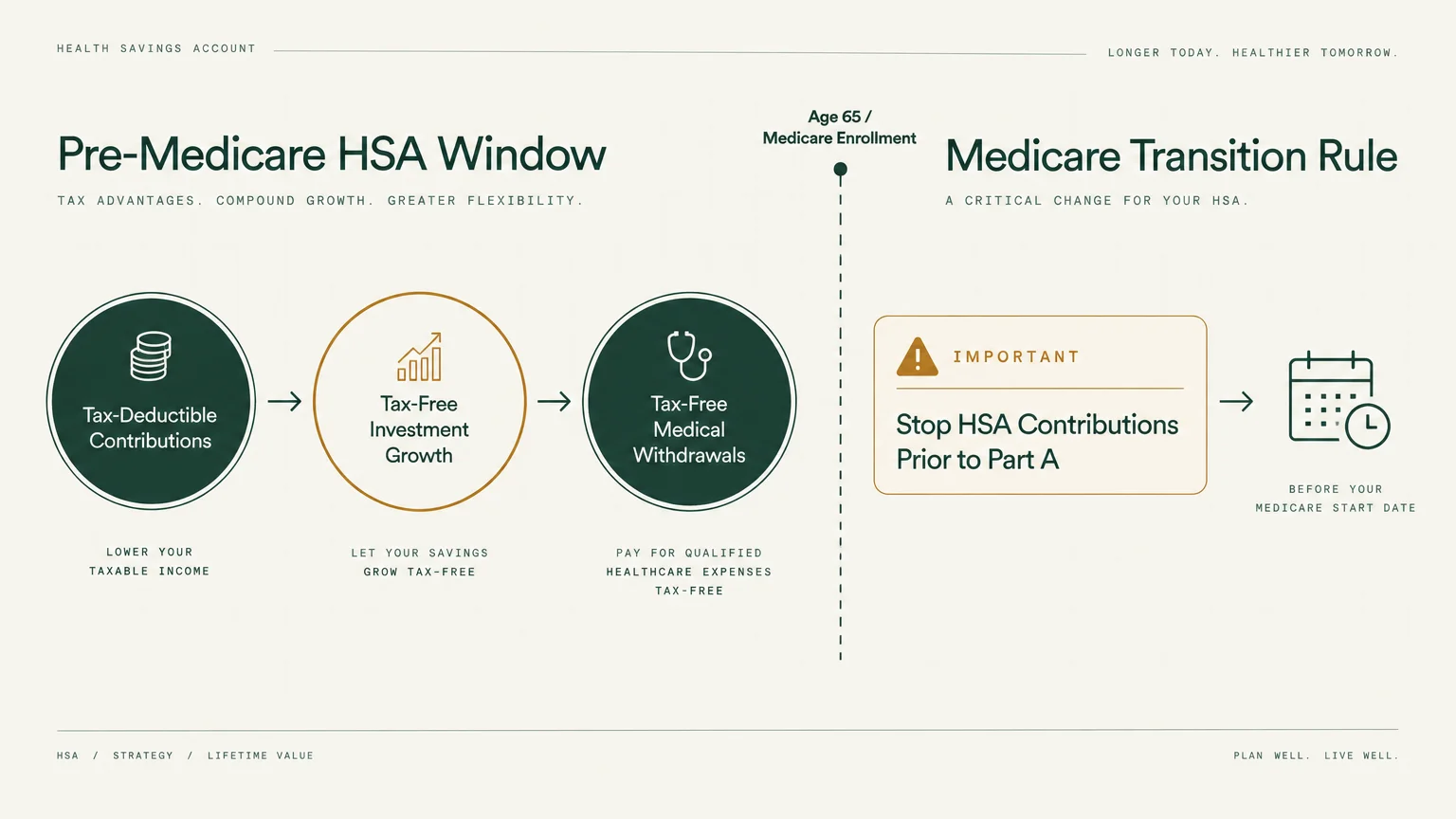
Enrolling in any part of Medicare automatically ends your legal ability to contribute to a Health Savings Account. You must plan your final contributions carefully six months prior to Medicare enrollment to avoid tax penalties.
Once you enter Medicare, you can still spend accumulated HSA balances completely tax-free on qualified out-of-pocket medical expenses. You can even use these funds to pay Medicare Part B and Part D premiums.
Understanding these financial instruments empowers you to make informed decisions during open enrollment health insurance cycles. Strategic financial planning ensures your physical health remains fully supported throughout your retirement.
Important Safety Considerations
Protecting Your Care During Coverage Transitions
Switching health plans requires meticulous preparation to prevent dangerous gaps in your daily medical care. Never terminate your current coverage until your new insurance policy is active and officially verified.
Request a 90-day supply of your essential prescription medications before your current health plan expires. This buffer guarantees that you will not miss critical doses if initial pharmacy claims encounter administrative delays.
Ask your new insurance company about transition-of-care policies for ongoing medical treatments. Most insurers provide temporary 30-day coverage for non-formulary medications and out-of-network physicians while you transition.
Review the Annual Notice of Change document sent by your insurer every September. This vital document outlines upcoming alterations to your drug formulary, copay amounts, and physician network for the next year.
Tracking Deadlines and Medical Documentation
Keep careful track of enrollment deadlines so you do not miss your selection window. Medicare Open Enrollment runs from October 15 to December 7, 2026, for coverage starting January 1, 2027.
ACA Marketplace Open Enrollment runs from November 1, 2026, to January 15, 2027, in most states. However, you must enroll by December 15, 2026, for your coverage to begin on New Year’s Day.
Enrolling between December 16 and January 15 results in a February 1 start date, leaving a temporary coverage gap. Maintaining continuous coverage ensures you never face financial ruin during a sudden medical emergency.
Gather and store complete paper copies of your medical records, immunization logs, and recent diagnostic scans. Having physical records empowers you to advocate for yourself if you must establish care with new providers.
Always verify that your active treatment authorizations, such as physical therapy or chemotherapy orders, transfer smoothly to your new plan. Proactive coordination protects your recovery timeline and prevents costly administrative delays.

When to Talk to Your Doctor
Collaborating on Formulary and Care Decisions
Consult your physician before making any major modifications to your diet, exercise routine, or supplement intake. Your personal doctor understands your unique medical history and can tailor safe boundaries for physical activity.
If your prospective health plan requires medication substitutions, schedule a clinical discussion immediately. Never switch from a brand-name drug to a generic or biosimilar without confirming clinical appropriateness with your provider.
Bring a copy of your plan formulary to your annual physical examination each year. Your doctor can reference this drug list when prescribing new therapies to keep your out-of-pocket costs minimal.
Ask your physician for assistance in filing formulary exception requests if your vital medications are excluded. Doctors can submit medical necessity letters that compel insurers to cover essential treatments at preferred cost rates.
Coordinating Procedures and Diagnostic Screenings
Discuss scheduled surgical interventions, elective joint replacements, or ongoing physical therapies with your clinical care team. Coordinating the timing of these procedures around your plan deductible renewal date can save you thousands of dollars.
Request that your doctor properly codes all routine preventative laboratory tests and screenings during your annual check-up. Correct billing codes ensure your insurer processes blood work and mammograms without unexpected cost-sharing charges.
Inform your doctor immediately if financial strain tempts you to ration medication or skip necessary specialist visits. Clinicians can often connect you with prescription assistance programs or alternative therapeutic regimens that fit your budget.
Frequently Asked Questions
What happens if my primary care doctor leaves my health plan network mid-year?
If your physician terminates their contract mid-year, contact your insurer immediately to request continuity of care. Most plans permit ongoing covered care for up to ninety days if you are undergoing active medical treatment.
Use this transition period to ask your physician for trusted referrals to other in-network colleagues. Establishing care with a new provider early ensures your chronic disease management proceeds without interruption.
Can I change my prescription drug plan if my medication costs increase dramatically?
Generally, you can only switch your Medicare Part D or commercial prescription coverage during annual open enrollment. Mid-year changes require qualifying life events, such as moving out of your plan service area.
If an unexpected price hike occurs mid-year, ask your physician about therapeutic alternatives on lower tiers. You may also apply for low-income subsidies or patient assistance programs offered by pharmaceutical manufacturers.
How does enrolling in Medicare impact my existing Health Savings Account?
Once you enroll in Medicare Part A or Part B, you can no longer contribute funds to an HSA. However, you retain full ownership of existing balances and can spend them on qualified medical expenses tax-free.
To avoid retroactive tax penalties, stop making HSA contributions up to six months before applying for Medicare benefits. Review IRS guidelines carefully if you continue working past age sixty-five with employer coverage.
What steps should I take if my insurance company denies coverage for physical therapy?
Begin by requesting a written explanation of benefits detailing the precise reason for the coverage denial. In many instances, the denial stems from simple coding errors or missing physician referral documentation.
Work directly with your therapist and prescribing physician to file an expedited internal appeal with the insurer. Submitting clinical progress notes demonstrating functional mobility gains often overturns the insurer’s initial refusal.
What is the difference between an annual wellness exam and a diagnostic physical?
An annual wellness visit focuses on creating a personalized prevention plan and reviewing your medical history at zero copay. A diagnostic physical addresses specific acute symptoms or chronic condition management, which may trigger standard copayments.
Clarify the purpose of your appointment with your physician’s billing staff before your examination begins. This simple step prevents unexpected bills while ensuring you receive your entitled preventative health evaluations.
For authoritative health information, refer to the National Institute on Aging (NIA) and the CDC. For heart health, visit the American Heart Association. For Medicare questions, go to Medicare.gov.
Disclaimer: This article provides general wellness information and is not medical advice. Always seek the advice of your physician or other qualified health provider with any questions you may have regarding a medical condition.