

The holidays bring genuine joy, yet seasonal bills can quickly overwhelm a fixed retirement income. Understanding what holiday spending retirees face compares to national averages helps you protect your savings.
Baby Boomers ages 62 to 80 plan to spend 16.2% less on the holidays in 2026 than in 2025. Even so, grandparent gifts, hosting meals, and higher shipping rates quietly strain your monthly cash flow.
You do not need deep pockets to keep family traditions warm and memorable. Use these smart, data-backed ideas to trim your holiday budget and enjoy every celebration without financial regret.
Lifestyle Idea #1: Benchmark Your Budget Against Real 2026 Spending
Holiday price tags look very different depending on your stage of life. Looking at real national figures gives you clear permission to spend less without feeling stingy.
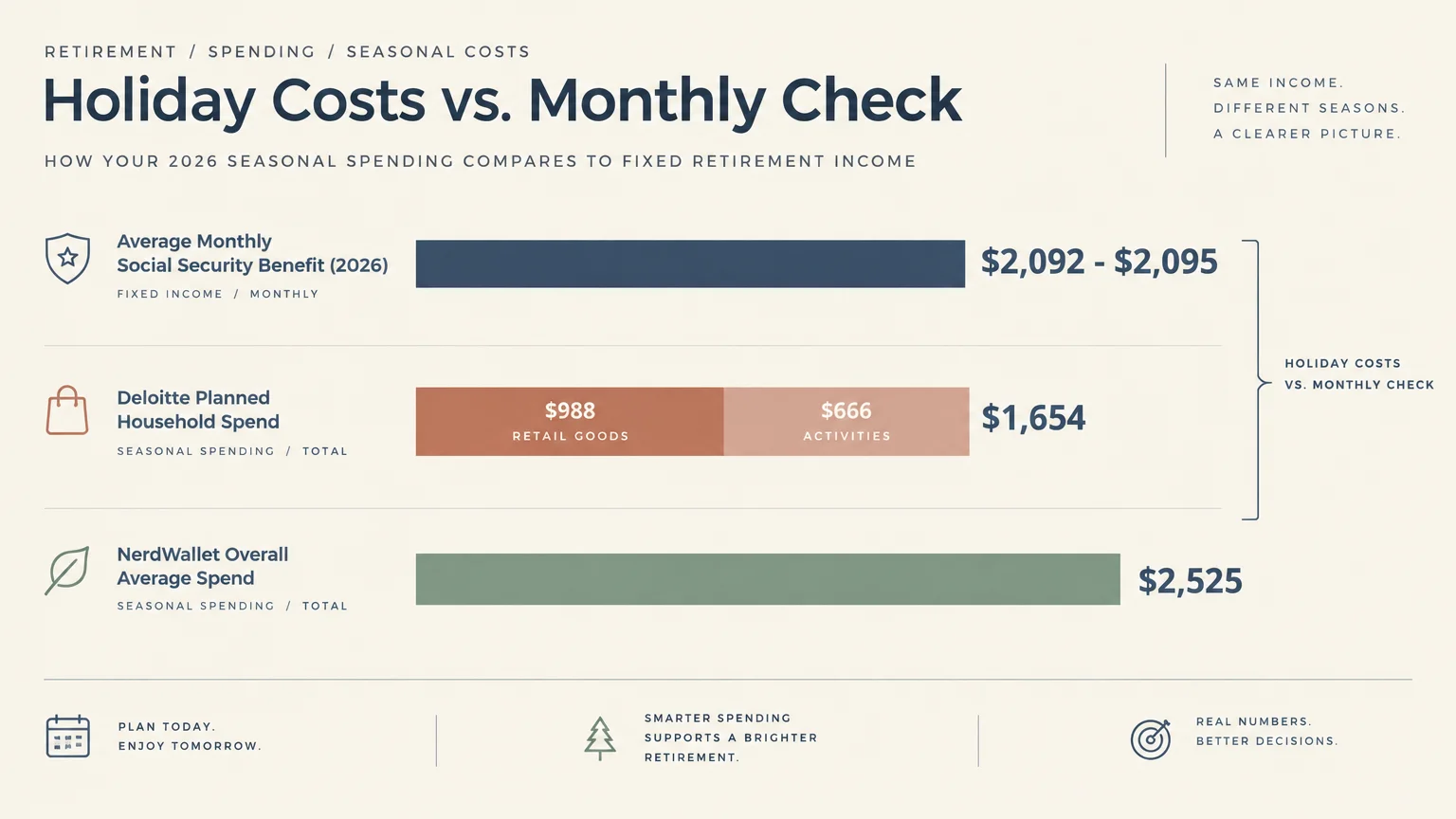
According to Deloitte’s 2026 consumer survey, average planned household holiday spending sits at $1,654 across the country. That breaks down to $988 on retail goods and $666 on holiday activities.
NerdWallet’s 2026 Holiday Spending Report paints an even broader picture, showing 92% of Americans plan to spend an average of $2,525 per person overall. Meanwhile, average gift budgets dropped 21% to $879 this year.
Why Older Adults Are Pulling Back
You are in great company if you feel ready to scale down your christmas spending. Deloitte reports that while Millennials expect to spend $2,087, Baby Boomers are cutting back by 16.2%.
Household size drives much of that difference. PwC’s Holiday Outlook 2026 estimates average gift spending at $708 overall, dropping to $635 for households without children compared with $875 for parents at home.
Inflation also distorts what your dollars actually buy. In Morgan Stanley’s November 2026 survey, 54% of shoppers spending more blamed higher prices, while only 37% planned to buy extra gifts.
Compare Holiday Costs to Your Monthly Check
Putting your seasonal spending next to your monthly income creates instant clarity. The average monthly Social Security benefit for a retired worker in 2026 runs between $2,092 and $2,095.
When a single holiday season approaches $1,654 or $2,525, it rivals an entire month of retirement pay. Write down your total target number today so every purchase stays anchored to reality.
Lifestyle Idea #2: Set Warm, Clear Boundaries on Grandparent Generosity
Two-thirds of Americans ages 65 and older are grandparents, and spoiling grandkids feels wonderful. Still, unbudgeted generosity can quietly derail your annual finances.
AARP’s June 2026 Powering Families study found that 9 in 10 grandparents gave financial support to grandchildren during the past year. That support averaged $2,654 annually across all grandchildren combined.
Look closely at what that number means for your wallet. Spending $2,654 a year exceeds the average monthly retiree Social Security check.
Other data shows costs climb even higher when dining and outings join the mix. The Senior List’s 2025 Grandparent Spending Report recorded an average annual spend of $3,917, with 10% of grandparents spending $10,000 or more.
Practical Ways to Cap Your Gift Budget
Trimming your gift budget does not mean shrinking your love. Start by setting a firm dollar limit per grandchild before you browse a single store or website.
Call your adult children in November to coordinate wish lists. Asking parents what their kids truly need prevents duplicate toys and lets you chip in toward one meaningful item.
Consider trading physical clutter for shared time together. Hosting a cookie-decorating afternoon, visiting a local light display, or contributing to a child’s future fund creates lasting memories at half the price.
Pair a modest present with a personal family heirloom or handwritten story from your childhood. Grandchildren treasure learning about your life far more than another plastic gadget they will outgrow by spring.
If you love spoiling grandkids every December, start a dedicated savings bucket in January. Setting aside a small amount each month removes all pressure from your winter utility and grocery bills.

Lifestyle Idea #3: Share Hosting Duties and Trim Feast Extras
Cooking for a crowd brings everyone to your table, yet hosting adds up faster than most cooks expect. Knowing where meal dollars actually go helps you keep dinner affordable.
LendingTree’s November 2026 survey found that 51% of Americans plan to host Thanksgiving for an average of 10 guests. Hosts expect to spend $427 on food, drinks, and housewares, up from $414 last year.
Interestingly, the American Farm Bureau Federation’s 2025 survey priced a classic dinner for 10 at just $55.18, or about $5.20 per person. The remaining roughly $370 goes toward other food, drinks, and housewares.
Let the Next Generation Host
You do not have to carry the whole kitchen forever. LendingTree notes that only 42% of Baby Boomers are hosting this year, compared with 58% of Millennials and 67% of parents with minor children.
Accept your adult children’s invitations graciously when they offer to take a turn. You can still bring your signature pie or casserole without paying for the entire spread.
When you do host at your place, turn dinner into a cheerful potluck. Ask guests to bring side dishes, beverages, and desserts while you prepare the centerpiece roast.
Swap expensive evening roasts for a festive holiday brunch when hosting extended family. Egg bakes, seasonal fruit, and coffee feel celebratory while costing a fraction of a multi-course dinner.
Skip disposable seasonal tableware and costly floral centerpieces. Using your everyday dishes and placing pinecones or candles down the table saves money while feeling wonderfully personal.
Lifestyle Idea #4: Shop Smart and Embrace Handmade Traditions
Retailers use flashy displays to nudge you into overspending, yet most shoppers are pushing back hard this year. Smart habits help you save money; holidays feel warmer when you skip the stress.
In the National Retail Federation’s October 2026 survey, 56% of adults said the economy affects their holiday spending. Among those shoppers, 43% seek sales more often, 31% comparison-shop online, and 29% use coupons regularly.
Deloitte’s 2026 survey reveals an even stronger shift toward smart thriftiness. Nearly nine in ten shoppers hunt for deals, and 77% happily trade down on brands and retailers.
PwC also found that 80% of consumers use a formal budgeting strategy this season. Another 79% wait for actual markdowns before deciding when to click buy.
Put Homemade and Regifted Treasures to Work
Do not hesitate to get creative when filling stockings or wrapping gifts for friends. Deloitte’s data shows 49% of shoppers plan to make their own gifts, and 52% plan to regift unused items.
Bake batches of spiced nuts, jam, or biscotti and package them in simple glass jars with ribbon. Neighbors, bridge partners, and book club friends appreciate edible treats far more than generic knickknacks.
Pass along brand-new, unopened items sitting in your closet to someone who will genuinely love them. Just keep careful notes so you never accidentally regift an item back to its original giver.
Unsubscribe from retail promotional emails during November and December to curb impulse shopping. Enforce a strict 48-hour waiting rule before purchasing any non-essential item you spot online.
Lifestyle Idea #5: Master Gift Cards and Reclaim Hidden Cash
Gift cards simplify shopping when family members live across the country or have picky tastes. You simply load a fixed dollar amount and keep your christmas spending strictly on target.
The National Retail Federation reports that gift cards top 47% of consumer wish lists in 2026. That makes them the most requested present of the season, ahead of clothing at 44%.
Unfortunately, billions of dollars in gift cards never reach the cash register. Bankrate estimates Americans currently hold $27 billion in unused gift card balances sitting in wallets and desk drawers.
Turn Forgotten Cards into Holiday Savings
Before you withdraw cash for groceries or presents, empty every pocketbook and kitchen junk drawer. Gather old gift cards for pharmacies, coffee shops, big-box stores, and restaurants.
Federal rules protect the value sitting on most of those plastic cards. Under the Credit CARD Act of 2009, as explained by the Consumer Financial Protection Bureau, gift card funds cannot expire for at least five years.
Spend those forgotten balances on stocking stuffers, wrapping paper, or holiday baking ingredients. Every dollar you cover with an old gift card stays safely inside your bank account.
Check the back of each card for balance-lookup numbers or websites before heading to the checkout counter. Knowing the exact pennies left on a card avoids awkward surprises at the register.
When buying new cards for grandchildren, stick to versatile merchants you know they visit regularly. Write the dollar amount on the sleeve and encourage them to spend it right away.
Lifestyle Idea #6: Beat 2026 Postage Hikes and Shipping Deadlines
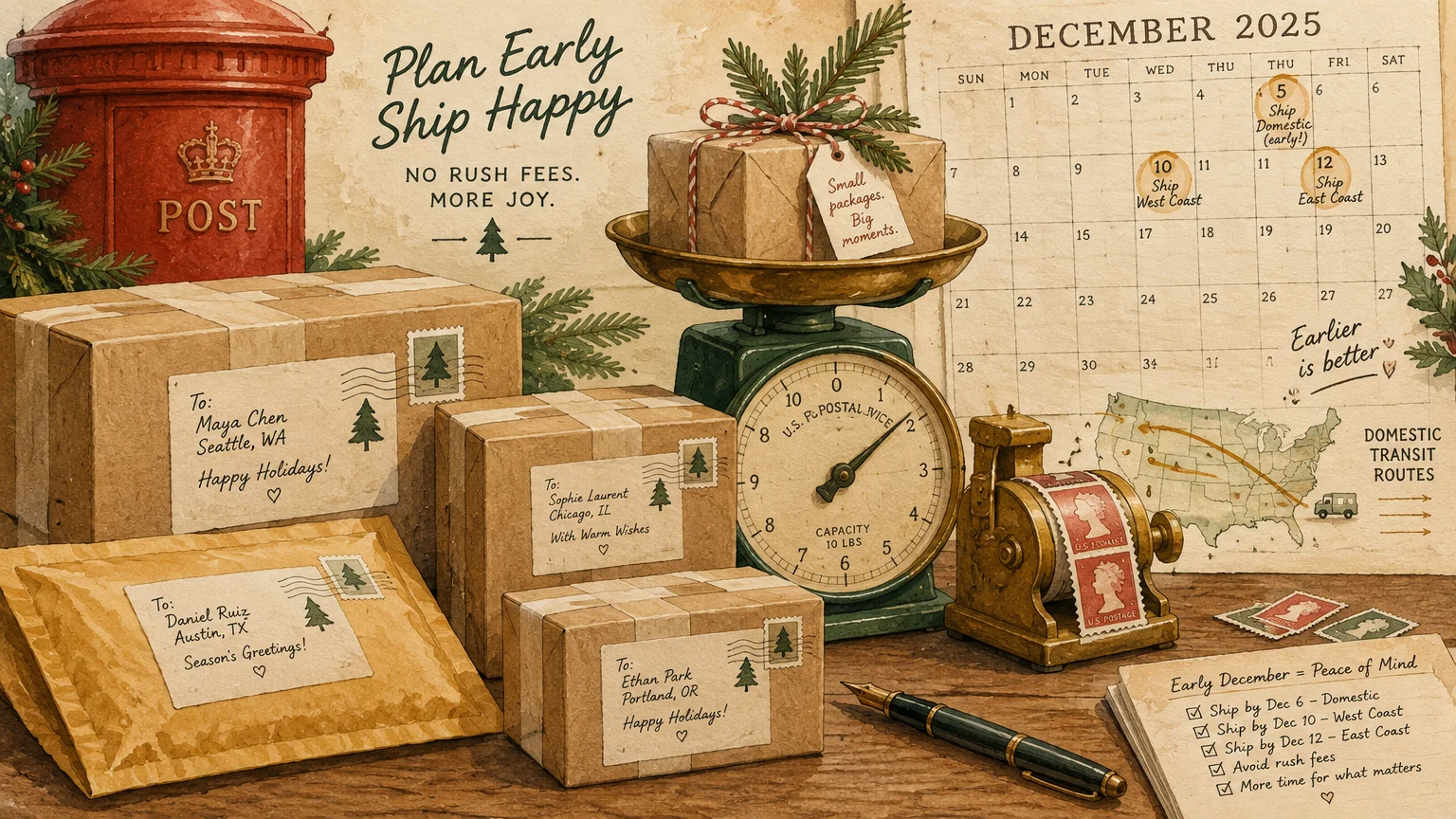
Mailing cards and heavy care packages costs noticeably more in late 2026 than in years past. Planning your trip to the post office early keeps express shipping charges from blowing up your budget.
Postal rate increases took effect on July 12, 2026, raising a First-Class Forever stamp from 78 cents to 82 cents. Metered one-ounce letters rose to 78 cents, and domestic postcards increased from 61 cents to 65 cents.
Sending parcels brings an extra seasonal fee as well. Between October 4, 2026, and January 17, 2027, the U.S. Postal Service added temporary holiday surcharges on Ground Advantage, Priority Mail, and Priority Mail Express.
Commercial surcharges range from 40 cents up to $18.20 depending on weight and distance. Standard Flat Rate products climbed by 85 cents, while Large Flat Rate Boxes rose by $1.75.
Mark These Exact 2026 Mailing Cutoffs
Missing a shipping cutoff forces you into pricey overnight delivery. Write these 2026 Postal Service deadlines on your kitchen calendar for delivery before December 25, including Alaska, Hawaii, and U.S. territories.
Send Ground Advantage and First-Class Mail packages no later than Thursday, December 17, 2026. Priority Mail must go out by Friday, December 18, and Priority Mail Express closes on Saturday, December 19.
Families celebrating Hanukkah face an earlier timeline in 2026. Because Hanukkah runs from December 4 through December 12, mail those gifts by late November to avoid rush fees.
Use smart shortcuts to trim postage bills even further. Media Mail and international shipping are exempt from the temporary holiday surcharge, making Media Mail ideal for shipping hardcover books.
Better yet, order gifts online and ship them directly to out-of-state relatives using free shipping thresholds. Trim your holiday card list to close friends and distant relatives, and send cheerful phone calls or digital photos to local pals.
Lifestyle Idea #7: Travel Off-Peak Without Giving Up Family Visits
Seeing faraway loved ones ranks high on nearly every retiree’s wish list. Still, surging airfares and hotel rates can quickly price seasonal trips out of reach.
AARP’s March 2026 Travel Trends survey shows 64% of adults ages 50 and older expect to travel this year, down six percentage points from 2025. While 86% rank travel among their top discretionary priorities, cost stops many budgets.
Nearly half of respondents earning under $100,000 cited cost as a major barrier to traveling. Across all age groups, NerdWallet found that 31% of Americans plan to skip holiday travel in 2026, up from 22% last year.
Use Your Flexible Retirement Schedule
Your greatest financial superpower in retirement is calendar freedom. Because you no longer juggle school breaks or office vacation days, you can fly when everyone else stays home.
Visit your children and grandchildren during the first two weeks of December or right after New Year’s Day. Off-peak flights, rental cars, and hotels often cost far less, and airports feel calm and welcoming.
Always ask about senior discounts when booking rail tickets, hotels, or car rentals for off-peak trips. Choose refundable fares whenever possible so winter storms never leave you absorbing costly cancellation penalties.
If driving is feasible, coordinate carpools with siblings or nearby adult kids to split gas and tolls. Alternatively, offer to host one family visit at your home during a quiet winter weekend instead of booking peak December flights.

Lifestyle Idea #8: Protect Your Nest Egg from High-Interest Holiday Debt
Swiping plastic feels painless in December, yet credit card balances linger long after decorations come down. Retirees already lead younger generations in avoiding holiday debt, and keeping that streak alive matters more than ever in 2026.
In an October 2026 NerdWallet poll, 38% of U.S. adults planned to use credit for holiday bills. Baby Boomers led the pack in restraint, with only 17% planning to borrow.
Federal Reserve data from May 2026 shows 92% of adults ages 60 and older hold credit cards. Roughly 36% carried a balance at least once during the past year.
Those balances carry staggering costs right now. LendingTree’s December 2025 holiday debt survey found 37% of shoppers took on an average of $1,223 in seasonal debt, and 40% paid interest rates of 20.00% APR or higher.
By August 2026, the Federal Reserve reported an average credit card APR of 22.36% on accounts charging interest. Bankrate’s November 4, 2026 rate update puts the national average at 19.71%, while Forbes Advisor lists new card offers at 24.88%.
Long-term balances trap millions of households. Bankrate’s 2026 Credit Card Debt Report found 61% of debtors have carried balances for at least a year, and 22% doubt they will ever pay them off.
Watch Out for Store Cards and Buy Now, Pay Later
Cashiers often tempt you with instant discounts if you open a retail store card at checkout. In LendingTree’s holiday debt survey, 32% of debtors used store cards and 35% leaned on Buy Now, Pay Later loans.
The Consumer Financial Protection Bureau warns that many store cards rely on deferred interest promotions. If even a single dollar remains unpaid when the promotional period ends, retroactive interest around 25% hits the entire original purchase.
Ask for a Lower Rate Today
If you already carry a balance or plan to use a card for buyer protection, make one five-minute phone call. Call the customer service number on the back of your card and request a lower interest rate.
A June 2026 LendingTree survey revealed that 84% of cardholders who asked for a lower APR got approved, saving an average of 6.3 percentage points. Surprisingly, only 23% of cardholders had ever bothered to ask.
Better yet, move your holiday gift budget onto a debit card or into a dedicated cash envelope. Paying immediately guarantees zero interest charges follow you into spring.
Lifestyle Idea #9: Plan Around Caregiving Costs and 2027 Income Changes
Sometimes holiday budgets break not from extra gifts, but from silent pressures happening behind the scenes. Caring for an aging spouse, parent, or disabled relative takes enormous energy and real cash.
AARP’s October 2026 Caregiving Out-of-Pocket Costs Study reports that family caregivers spend an average of $11,508 per year out of pocket. That expense consumes nearly one-third of an average caregiver’s household income.
Give yourself total grace if caregiving fills your days and drains your savings. Tell extended relatives clearly that you are sitting out gift exchanges this year to focus on health and family care.
Factor in 2027 Social Security and Tax Updates
Knowing what arrives in the new year helps you make calm decisions this December. On October 14, 2026, Social Security announced a 3.6% cost-of-living adjustment starting in January 2027, or December 31, 2026, for roughly 7.3 million SSI recipients.
That adjustment adds an estimated $75 per month on average for retired workers, lifting the typical check to around $2,170. Treat that extra $75 as a cushion for rising groceries and utilities rather than money to cover December overspending.
Also keep tax rules in mind as you review retirement withdrawals before year-end. According to Fidelity, retirees age 65 and older can access a senior tax deduction of up to $6,000 per person, helping offset taxes on Social Security or account withdrawals.

Putting It into Practice: Small Steps for Big Changes
Transforming your holiday finances does not require an all-or-nothing overhaul. Take a few small, steady actions this week so you greet January with peaceful bank statements.
First, list every person you plan to buy for, assign a firm dollar cap, and total the column before shopping. Cut or combine names until that total sits comfortably inside cash you already have.
Second, gather every unused gift card from your drawers and earmark those balances for wrapping supplies or groceries. Third, talk openly with adult children about rotating hosting duties or drawing names for adult gifts.
Fourth, check your calendar against the December 17 through December 19 postal cutoffs, or late November for Hanukkah packages. Mailing early saves money and spares you crowded lobby lines.
Fifth, lock away retail store credit cards and commit to paying off any holiday charges before the next billing cycle closes. Finally, review your January bank statements once the season ends to spot painless spots to trim next year.
For resources on retirement living, travel, and finance, visit AARP. Official information on Social Security is available at SSA.gov. For travel advisories, consult the U.S. Department of State.
Frequently Asked Questions
How do I tell my family I need a smaller holiday budget without feeling embarrassed?
Lead with warmth and honesty rather than apology. Tell your family early that you want to focus on sharing meals and time together rather than exchanging expensive gifts.
Most relatives feel relieved when someone speaks up first. Propose a Secret Santa drawing for adults or set a modest spending cap so everyone wins.
What is the safest way to pay for online gifts without racking up credit card debt?
Use a dedicated credit card strictly for online buyer protection, then transfer money from your checking account the same week. You get strong fraud protection without ever paying a cent of interest.
If tracking multiple charges feels stressful, reload a prepaid card or stick to one set checking account earmarked solely for holiday expenses.
How can I celebrate with distant grandchildren without spending hundreds on flights or shipping?
Order gifts directly from retailers that ship free to your grandchildren’s doorstep, avoiding peak postal surcharges altogether. Then schedule a cozy video call to watch them unwrap packages in real time.
You can also plan your actual in-person visit for January or February when airfares drop sharply. Having a winter visit on the calendar gives everyone something joyful to look forward to after December.
Should I use next year’s Social Security COLA to pay off December christmas spending?
Avoid counting on January’s raise to rescue December’s bills. The 3.6% adjustment adds roughly $75 a month on average, which everyday inflation in utilities, food, and healthcare easily absorbs.
Instead, keep your holiday spending inside this month’s available cash so January’s extra income strengthens your emergency savings.
Disclaimer: This article provides lifestyle suggestions for informational purposes. Financial, legal, or travel decisions should be made in consultation with qualified professionals.