

A brand-new federal retirement match arrives in 2027 to deposit up to $1,000 of government money straight into your nest egg. This historic program rewards modest earners and working seniors who actively save for their future.
Unlike previous tax credits that merely reduced what you owed, the upcoming Saver’s Match delivers cash into your retirement account. You can qualify even if you owe zero dollars in federal income taxes.
Understanding these updated rules today allows you to adjust your late-career earnings and maximize your wealth when payouts begin in 2028.
Tip #1: Grasp How the 50% Saver’s Match Outshines the Legacy Tax Credit
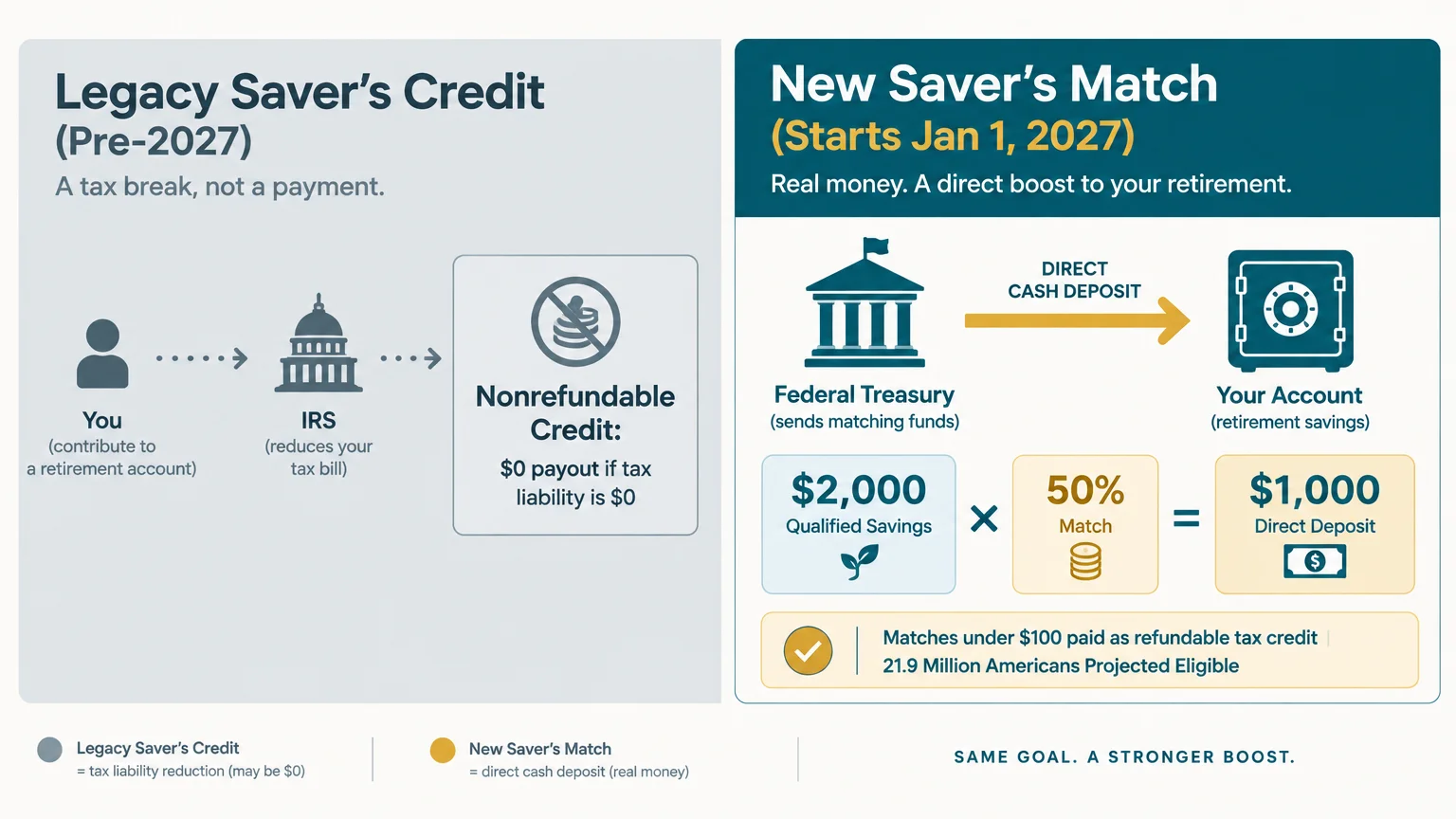
Congress enacted this transformative retirement savings incentive under Section 103 of the SECURE 2.0 Act of 2022. It officially replaces the older, nonrefundable Saver’s Credit starting on January 1, 2027.
For decades, the legacy credit provided zero financial relief if your deductions eliminated your tax liability. Millions of lower-earning older workers and semi-retirees missed out completely.
The new Saver’s Match reshapes that outdated policy into an authentic government retirement contribution. You now receive real financial backing regardless of whether you owe taxes.
The federal government provides a direct 50% match on up to $2,000 in qualifying annual contributions. That formula delivers a maximum benefit of $1,000 per eligible person every year.
If you deposit $500 into your account, the Treasury deposits an additional $250. Depositing the full $2,000 secures the entire $1,000 match.
Contributions beyond $2,000 remain wonderful for your nest egg, but they do not generate additional matching dollars. The 50% match applies exclusively to your first $2,000 saved.
This contribution functions as an immediate fifty percent return on your savings. Very few traditional market investments offer such guaranteed, upfront gains without high risk.
The legislation establishes a sensible minimum threshold rule to simplify program administration. If your calculated match totals less than $100, the Treasury will not transfer funds to your retirement account.
Instead, you claim that smaller amount as a refundable credit on your annual tax return. You still receive every dollar you earned through your proactive saving efforts.
Replacing the old nonrefundable credit resolves a major flaw in previous retirement policy. Lower-income workers finally gain equal access to federal retirement incentives.
According to projections from the Employee Benefit Research Institute and Retirement Clearinghouse, approximately 21.9 million Americans will qualify for the match each year.
That massive reach ensures seniors across the country can strengthen their personal financial security as they prepare for retirement.
Tip #2: Measure Your Earnings Against the 2027 MAGI Phaseout Brackets
Qualifying for the full match depends on your Modified Adjusted Gross Income, commonly called MAGI. The law establishes precise income limits tailored to your specific tax filing status.
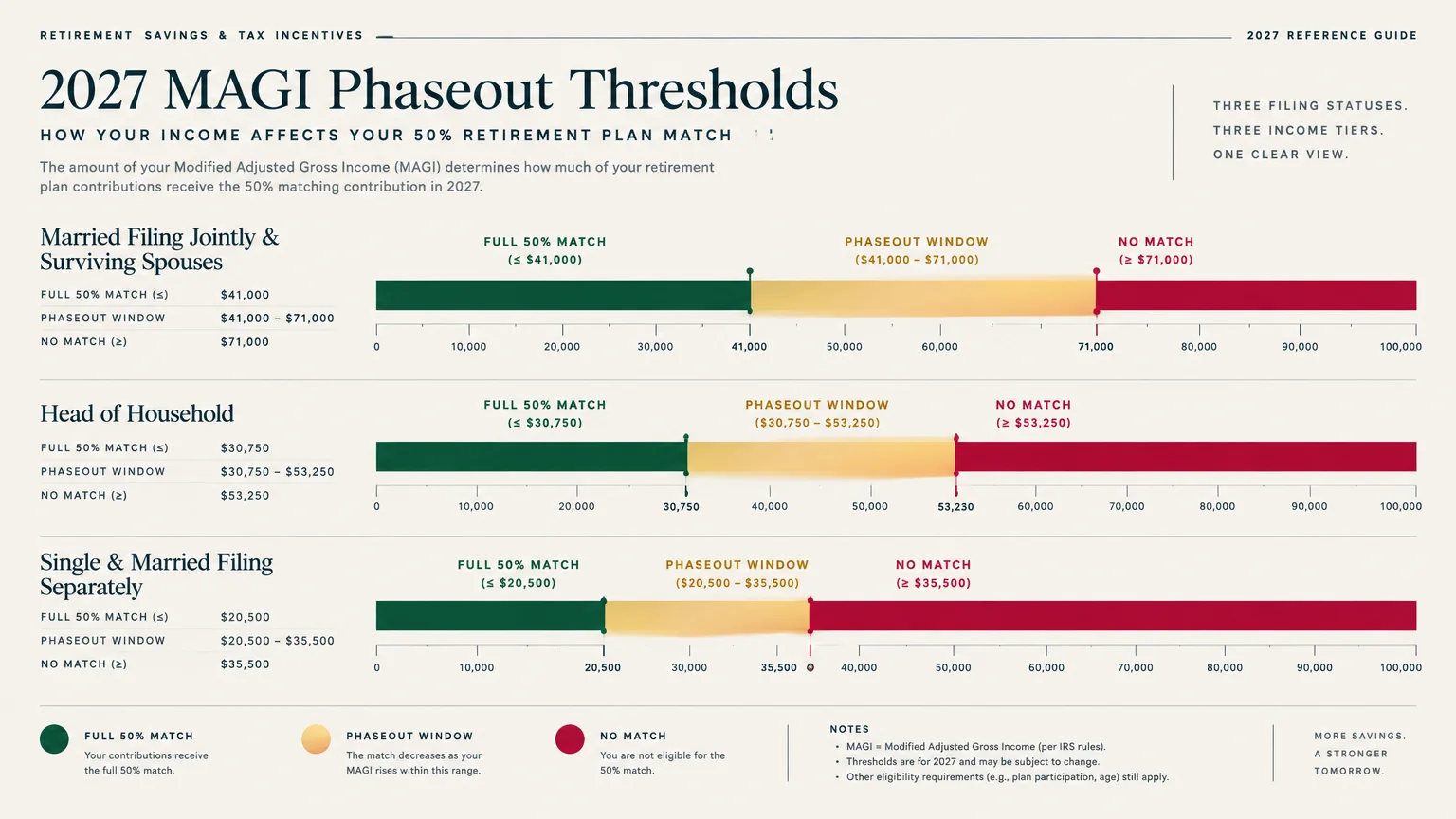
If you are married filing jointly, you receive the full 50% match with a MAGI at or below $41,000. The match then phases out gradually between $41,000 and $71,000.
Joint filers earning $71,000 or more will not qualify for matching funds. Qualifying surviving spouses use these identical joint income thresholds.
Heads of household secure the full 50% match at or below $30,750 in MAGI. Their benefit gradually phases out between $30,750 and $53,250.
Single filers and married individuals filing separately receive the full match at or below $20,500. Their match phases out between $20,500 and $35,500.
Earners above $35,500 in the single category cannot claim the match. Understanding these distinct ceilings helps you position your household income effectively.
Within each phaseout range, your matching percentage decreases gradually rather than disappearing abruptly. Earning slightly above the lower threshold still provides a partial government match.
These statutory income thresholds are fixed for the 2027 tax year. The federal government will begin adjusting these brackets annually for inflation starting in 2028.
You can proactively manage your MAGI through strategic pre-tax deductions before the tax year ends. Traditional workplace 401(k) contributions reduce your adjusted income directly.
Health savings account deposits and traditional IRA contributions can also lower your reported MAGI; consequently, you preserve your eligibility for the maximum match.
If you are semi-retired, monitoring your income late in the year helps you avoid crossing into higher phaseout tiers.
Reviewing your expected earnings each autumn prevents unexpected surprises when you prepare your tax return in the spring.

Tip #3: Turn Part-Time Retirement Earnings into Substantial Savings
To qualify for the federal retirement match 2027, you must have taxable compensation during the calendar year. The IRS defines taxable compensation as wages, salaries, tips, or net self-employment earnings.
Passive retirement receipts do not count as earned compensation. Social Security benefits, monthly pensions, and withdrawals from existing traditional IRAs will not qualify you for the match.
Investment dividends, bond interest, and capital gains are also excluded from eligible compensation. You must generate active earned wages to claim matching funds.
This requirement makes the program exceptionally beneficial for semi-retired older adults who maintain flexible part-time work. A consulting role, seasonal retail position, or community tutoring gig creates eligible compensation.
If you work as an independent contractor, your taxable compensation equals your net business profit. Subtracting allowable business expenses yields your net earned income.
Basic statutory rules require you to reach at least 18 years of age by the end of the tax year. You also cannot be claimed as a dependent on another taxpayer’s return.
Full-time students cannot claim the match; however, older adults taking occasional community college classes remain completely eligible.
Consider a practical scenario where you work twelve hours a week at a local botanical garden, earning $9,000 annually. You can easily allocate $2,000 of those earnings into an eligible retirement plan.
The U.S. Treasury then delivers a $1,000 matching deposit into your pre-tax account. Your total savings balance surges to $3,000 from that single year of part-time effort.
That arrangement allows you to stay socially connected through rewarding work while building significant financial resilience.
Aligning your post-career lifestyle with targeted federal incentives turns small paychecks into lasting retirement wealth.
Tip #4: Select the Correct Pre-Tax Accounts for Direct Treasury Deposits
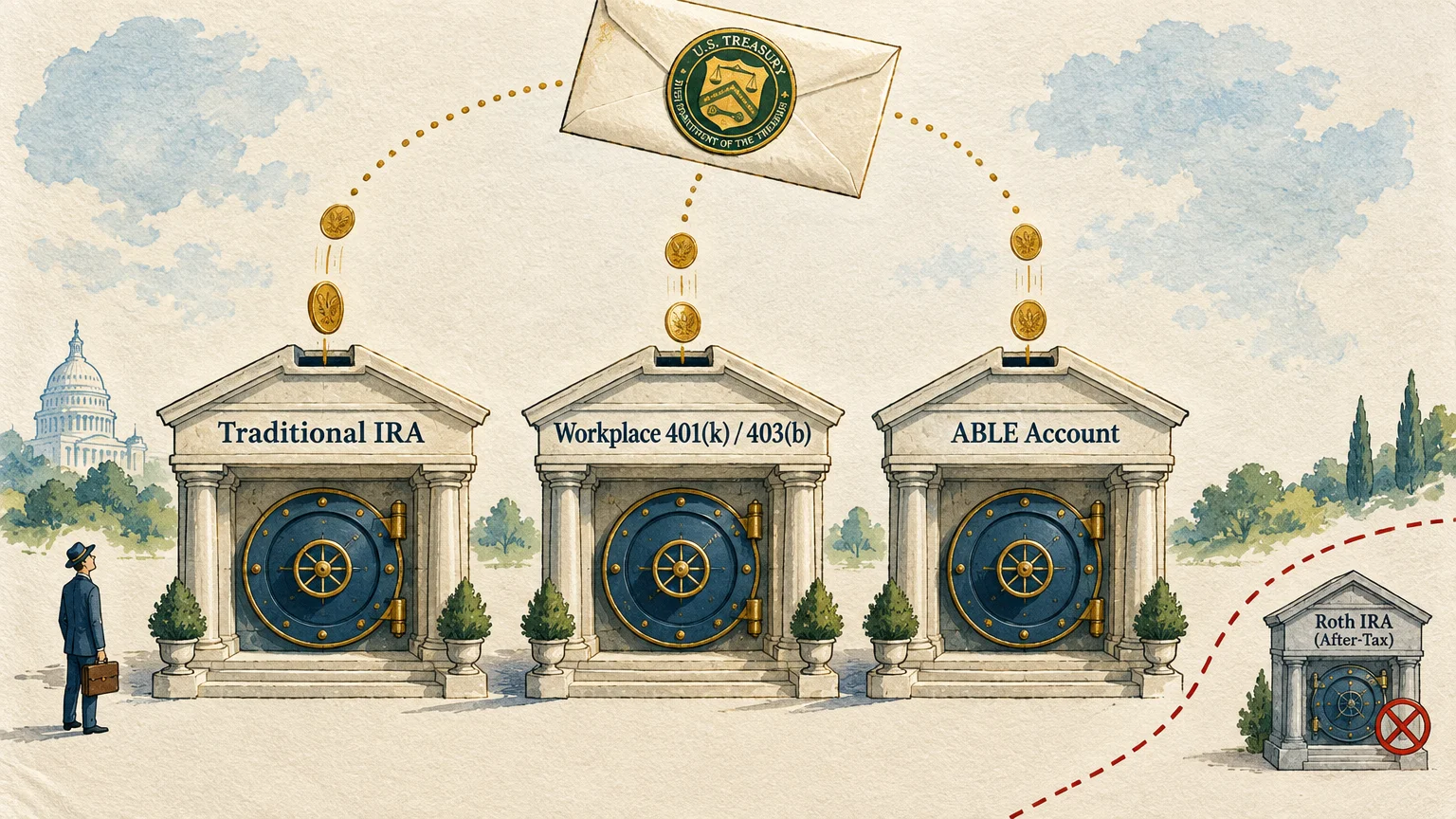
You enjoy remarkable freedom regarding where you make your personal contributions. Eligible options include traditional IRAs, Roth IRAs, 401(k)s, 403(b)s, and governmental 457(b) plans.
Teachers, hospital staff, and nonprofit workers can contribute through workplace 403(b) accounts. Retired public servants working part-time for local government can utilize governmental 457(b) plans.
A strict federal rule governs where the matching funds must land. The U.S. Treasury will only deposit matching contributions into a pre-tax traditional retirement account.
If you prefer saving your personal money into a Roth IRA, you can continue doing so. However, you must designate an active traditional IRA to accept the government’s matching funds.
The same rule applies if you contribute to a designated Roth 401(k). The government match cannot enter any Roth-style account under current law.
Federal matching deposits enter pre-tax accounts because Congress designed the program to defer taxes. You pay standard income taxes only when you eventually take distributions later in life.
Pay careful attention to the special rules surrounding ABLE accounts for individuals with disabilities. Contributions to ABLE accounts are not eligible for the new Saver’s Match.
ABLE account contributions will continue to qualify for the legacy Saver’s Credit on a revised IRS Form 8880. Keeping these accounts organized prevents filing complications.
Contact your preferred brokerage firm well before 2027 to confirm your account setup. Having an open traditional IRA ready guarantees a smooth, prompt deposit from the Treasury.
Tip #5: Double Your Household Benefit Through Joint Spousal Strategies
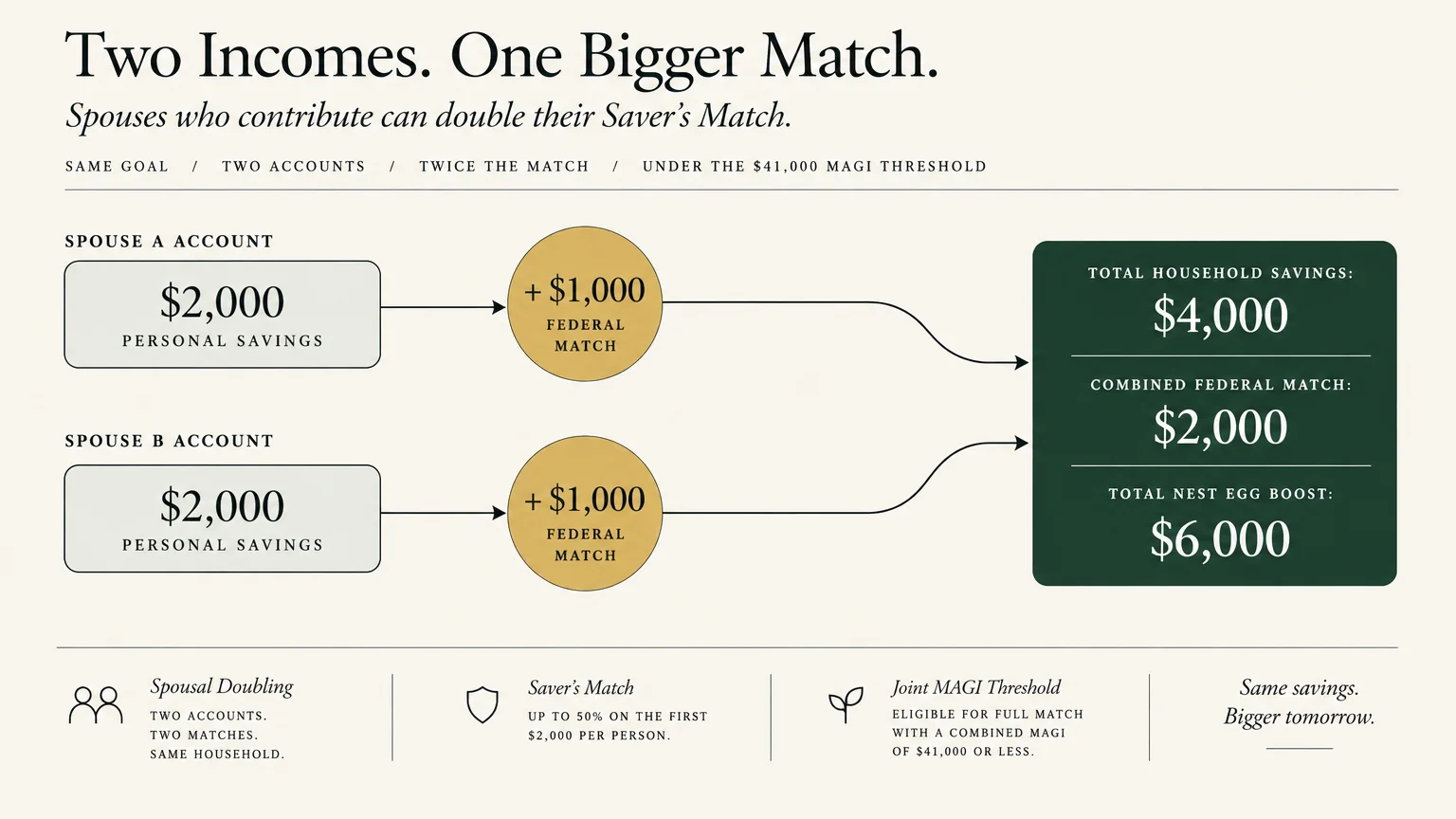
Married couples filing jointly enjoy an exceptional opportunity to multiply their federal retirement incentive. The statutory cap applies per eligible person rather than per tax return.
When both spouses contribute $2,000 to their separate qualifying accounts, your household secures a $2,000 government contribution.
To capture the entire $2,000 joint match, your combined household MAGI must remain at or below $41,000. That structure offers an outstanding boost for couples nearing full retirement.
What if only one spouse earns taxable compensation from a job? You can open and fund a spousal IRA for the non-working partner using household wages.
Tax law allows the working spouse’s earnings to satisfy the compensation requirement for both accounts. As long as total wages cover both contributions, you claim the double benefit.
Spousal IRAs must be held in the non-working spouse’s individual name. The IRS does not permit joint retirement accounts under any circumstances.
Contributing $4,000 across both accounts produces an immediate $2,000 federal match. Your combined nest egg increases to $6,000 before factoring in any investment returns.
Coordinating spousal savings also equalizes retirement balances between partners; consequently, both individuals enjoy greater personal security.
Married couples filing separately face a much lower phaseout ceiling, spanning $20,500 to $35,500. Filing jointly usually delivers superior tax and matching results.
Discussing these numbers with your spouse creates shared clarity and mutual purpose. Working toward collective savings goals adds peace and joy to your golden years.
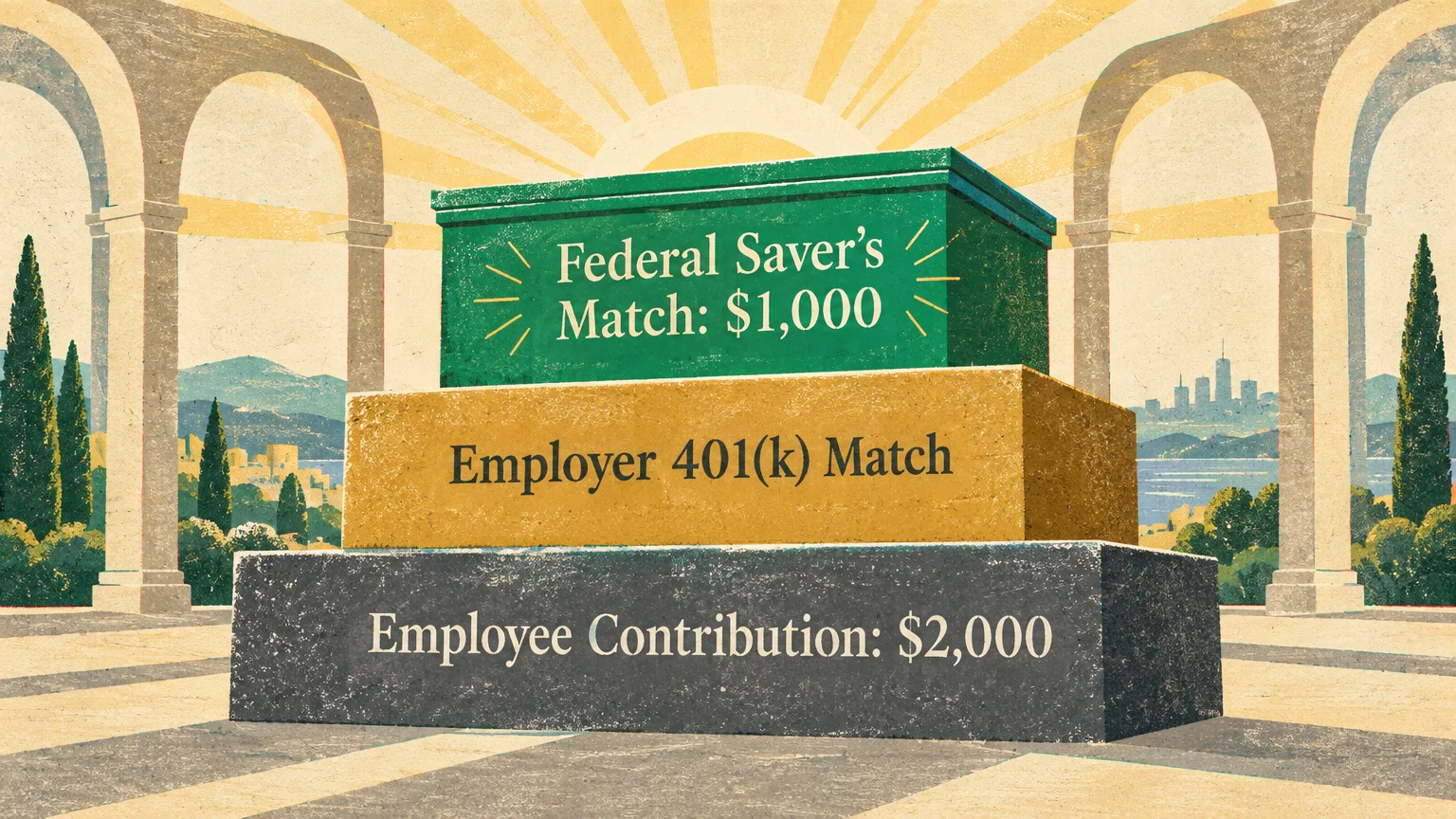
Tip #6: Stack Government Funds on Top of Workplace 401(k) Matches
Many workers wonder whether accepting a government match reduces their workplace benefits. The law makes clear that the federal match stacks completely on top of employer contributions.
If your employer provides a 50% or 100% 401(k) match, you can capture both benefits simultaneously. That powerful pairing accelerates your wealth accumulation beyond ordinary levels.
Consider a scenario where you save $2,000 and your company matches dollar-for-dollar. Your employer adds $2,000, and the U.S. Treasury adds $1,000, creating $5,000 in total savings.
Federal matching contributions do not count toward your annual IRS employee deferral limit. They represent supplementary funds paid directly by the government.
However, you must navigate an important operational detail regarding employer-sponsored retirement plans. Employers are not legally required to accept Saver’s Match deposits from the U.S. Treasury.
Some plan sponsors may choose not to modify their administrative systems to process Treasury payments. Fortunately, you will never forfeit your match if your employer opts out.
If your workplace plan declines direct deposits, you simply instruct the Treasury to deposit the match into an individual traditional IRA. The choice remains completely flexible.
Check with your human resources department or plan administrator to learn how your company plans to handle the 2027 rollout. Clear communication ensures you know where your match will go.
Stacking private company benefits with federal incentives produces maximum security for older workers transitioning toward retirement.

Tip #7: Prepare for Claiming Your Match with the New Form 8880-A
The federal retirement match takes effect for tax years beginning on January 1, 2027. You will make your qualifying contributions throughout the 2027 calendar year.
Payouts will begin in early 2028 when you file your 2027 federal tax return. The U.S. Treasury deposits matching funds directly after processing your tax documents.
Administrative preparations are already moving forward rapidly. On August 7, 2026, the IRS and Treasury Department released Notice 2026-48 (IR-2026-89), establishing proposed regulations for the program.
This administrative notice fulfills Executive Order 14403, which directs federal agencies to expand public awareness and simplify enrollment procedures for savers.
To claim your government retirement contribution, you will file the new IRS Form 8880-A alongside your tax return. Its official title is Saver’s Match for Qualified Retirement Savings Contributions.
Modern tax preparation software will integrate Form 8880-A automatically. You will enter your contribution amounts, and the program will calculate your match eligibility.
Form 8880-A requires you to list your qualifying contributions alongside the account number and routing details of your designated traditional retirement account.
Entering precise routing information prevents costly administrative delays. Double-checking those details guarantees that Treasury deposits arrive smoothly inside your account.
Notice 2026-48 emphasizes that electronic direct deposits will serve as the primary delivery mechanism for matching funds. Electronic transfers ensure speed and safety.
Establishing a dedicated folder for your 2027 contribution receipts keeps you organized. Simple preparation today makes filing painless when tax season arrives in 2028.
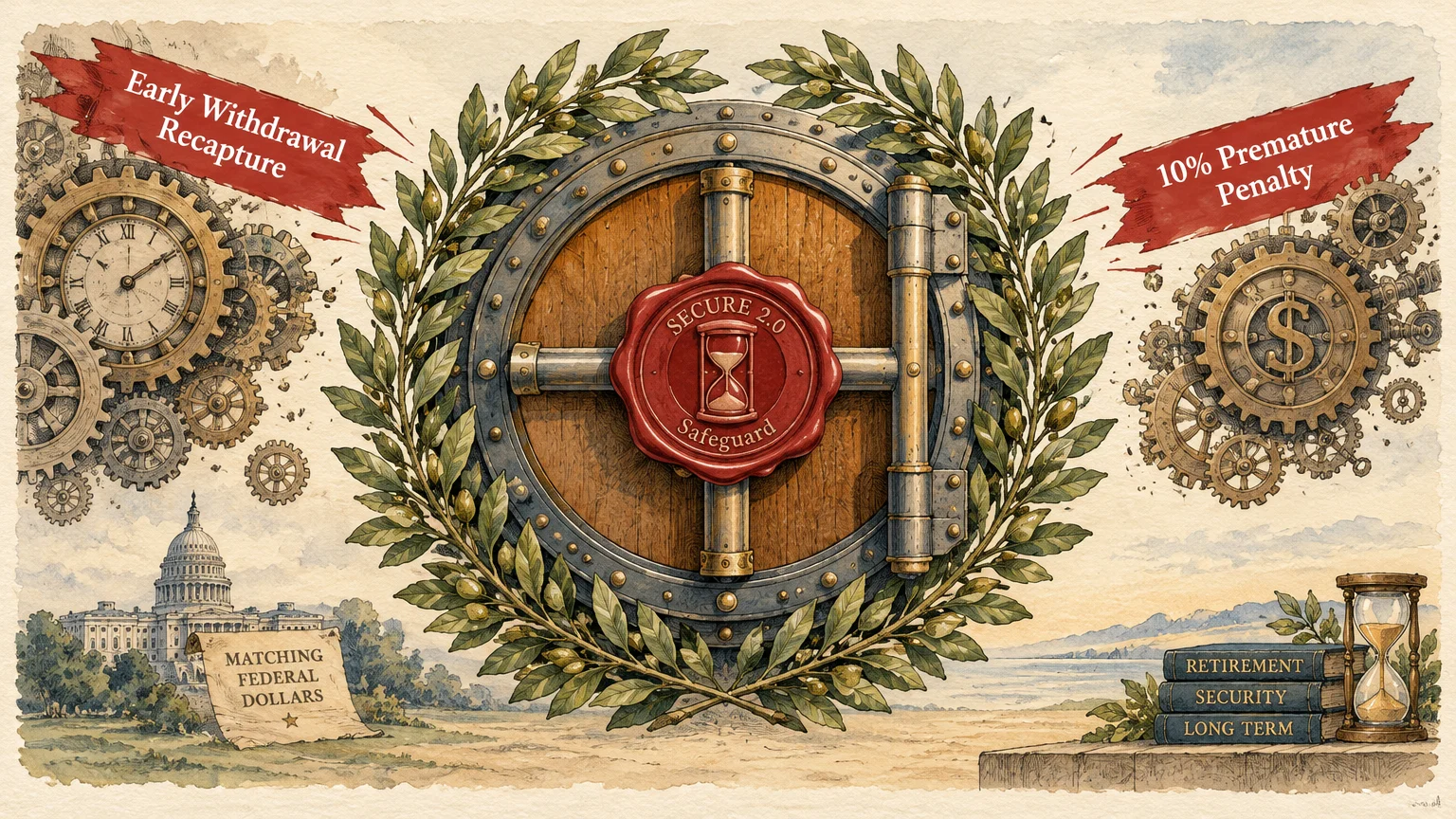
Tip #8: Guard Your Nest Egg Against Penalties and Recapture Rules
Building lasting wealth requires safeguarding the money you accumulate. Congress structured the Saver’s Match to foster long-term financial security rather than quick cash liquidations.
Standard early withdrawal rules apply to all funds held inside your retirement accounts. Withdrawing pre-tax funds before reaching age 59½ triggers an ordinary 10% IRS penalty.
This regulation is especially relevant for older adults in their early fifties who transition between career paths. Waiting until age 59½ shields your nest egg from painful penalty assessments.
Standard hardship exceptions under Section 72(t) still apply, such as unreimbursed medical expenses exceeding 7.5% of AGI. However, avoiding early withdrawals remains best whenever possible.
The statute also enforces strict recovery and recapture taxes on matched funds. If you withdraw matched dollars prematurely, the IRS can reclaim that government contribution.
These recapture rules prevent individuals from claiming the match and immediately cashing out for everyday spending. They ensure the funds remain dedicated to your retirement security.
Once you attain age 59½, these special recapture worries diminish. You can then take regular, qualified distributions under standard retirement tax rules.
Once the Treasury completes its matching deposit, leave those funds untouched to compound. Tax-deferred growth allows small initial deposits to expand substantially over time.
Respecting your retirement account as a protected sanctuary guarantees lasting stability throughout your golden years.
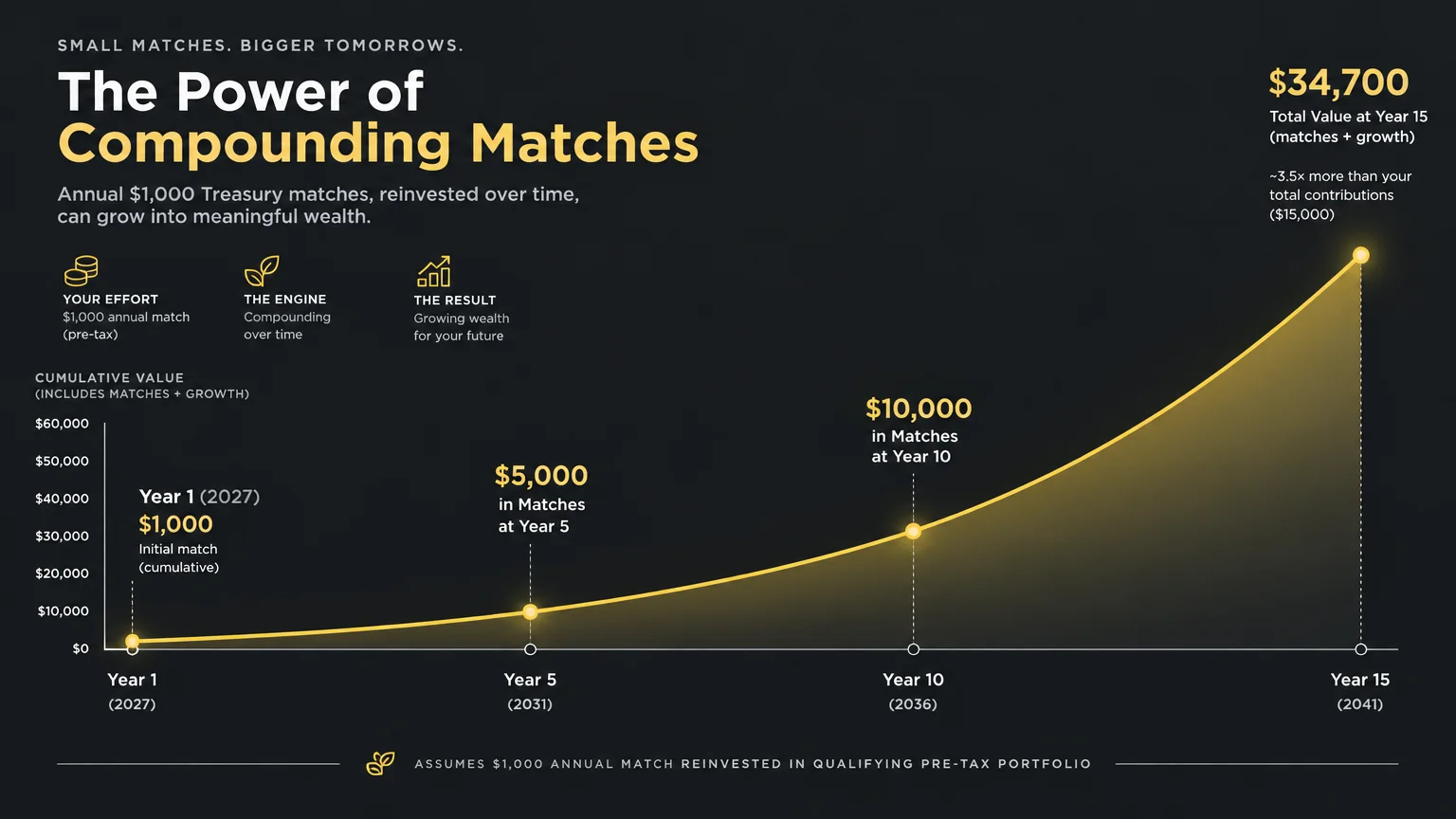
Tip #9: Position Your Retirement Assets for Long-Term Growth
Once government matching dollars arrive in your traditional IRA, you must choose how to invest them. Cash sitting idle in a money market fund cannot outpace inflation over time.
Many older savers benefit from conservative growth strategies that blend stable dividend stocks with high-quality bonds. That balance protects capital while generating modest portfolio growth.
Review your investment risk tolerance carefully as you approach full retirement. Shifting toward reliable, income-generating assets protects both your contributions and government matching funds.
Low-cost index funds and target-date retirement funds offer instant diversification. They eliminate the guesswork of selecting individual stocks and keep management fees very low.
Minimizing investment fees ensures that more of your money remains invested. Over a decade or more, low fees add thousands of dollars to your nest egg.
Maintain a separate cash emergency reserve in a high-yield savings account. An emergency cushion prevents you from selling investments or taking premature distributions during market downturns.
Rebalancing your portfolio once a year keeps your asset allocation aligned with your personal risk tolerance. Consistent maintenance builds quiet confidence in your financial future.

Tip #10: Build a Supportive Financial Routine for Your Golden Years
Success with the Saver’s Match reflects a broader commitment to your personal well-being. Establishing simple, automated monthly contributions ensures you effortlessly hit the $2,000 annual target.
Setting aside approximately $167 each month fulfills the maximum contribution requirement by December. Automatic transfers remove the stress of finding a large lump sum at year-end.
Dollar-cost averaging through monthly contributions also cushions you against market swings. You purchase more shares when prices are low and fewer when prices rise.
Pair your savings routine with uplifting lifestyle habits that celebrate your golden years. Spending time in nature, pursuing creative hobbies, and connecting with family enrich your everyday life.
Financial security provides the freedom to enjoy those precious moments without lingering money worries. A healthy nest egg supports your happiness, health, and peace of mind.
Consider speaking with a fee-only financial planner to review your complete retirement roadmap. Professional guidance ensures every element of your financial life works harmoniously.
You possess the wisdom and capability to make the most of this upcoming government program. Taking small, deliberate actions today guarantees a brighter, more fulfilling tomorrow.

The Takeaway: Living a More Blissful Retirement
Preparing for retirement should inspire optimism rather than anxiety. The launch of the 2027 Saver’s Match gives you a tangible tool to strengthen your financial foundation.
Securing a 50% match on your hard-earned dollars is an extraordinary opportunity. It turns consistent personal discipline into an immediate $1,000 windfall from the U.S. Treasury.
Take time now to assess your income brackets and explore eligible pre-tax accounts. Positioning yourself ahead of the 2027 tax year ensures you capture every dollar you deserve.
Remember that part-time employment can serve a dual purpose during semi-retirement. It keeps your days vibrant while producing the earned income needed to claim the match.
Small actions taken consistently yield enormous peace of mind over time. Watching your retirement balance grow provides genuine comfort and emotional freedom.
Your golden years belong to you, and every smart step builds greater independence. Embrace these upcoming opportunities with enthusiasm, confidence, and pride.
For a wide range of resources for older adults, visit AARP and the National Council on Aging (NCOA). Health information is available from the National Institute on Aging.
Frequently Asked Questions
Can I receive the Saver’s Match if my only income is Social Security?
No, you must have taxable earned compensation to qualify for the match. Social Security benefits and pension distributions count as retirement income rather than earned wages.
However, earning even a small amount from part-time work or freelance consulting unlocks eligibility. Modest earned wages allow you to claim the full government deposit.
What happens if my calculated match is less than $100?
The Treasury will not deposit amounts below $100 into a retirement account. That statutory threshold prevents processing costs on very small transfers.
Instead, you receive that sum as a refundable tax credit on your federal return. You never lose out on money you earned through saving.
Can the government deposit the matching funds into my Roth IRA?
No, federal regulations require all matched funds to enter a pre-tax traditional account. The match cannot be deposited directly into a Roth IRA.
You can still contribute your personal funds to a Roth IRA. In that scenario, you simply designate a separate traditional IRA for the government match.
Does the federal match count as taxable income in the year it is deposited?
No, the matching contribution deposited by the U.S. Treasury into your pre-tax account is not treated as taxable income in the deposit year.
Taxes remain deferred until you begin taking qualified distributions during retirement. That structure allows your entire match to compound without immediate tax reduction.
Does receiving the Saver’s Match impact my eligibility for public assistance?
Federal law protects savers by treating the matching contribution as a tax refund. The match does not count as income for means-tested federal benefit programs.
You can build your retirement savings without jeopardizing your access to essential public assistance programs. That legal safeguard protects vulnerable older adults.
Disclaimer: This article is for informational and inspirational purposes only. It is not a substitute for professional medical, financial, or psychological advice. Please consult with a qualified expert for guidance tailored to your individual needs.